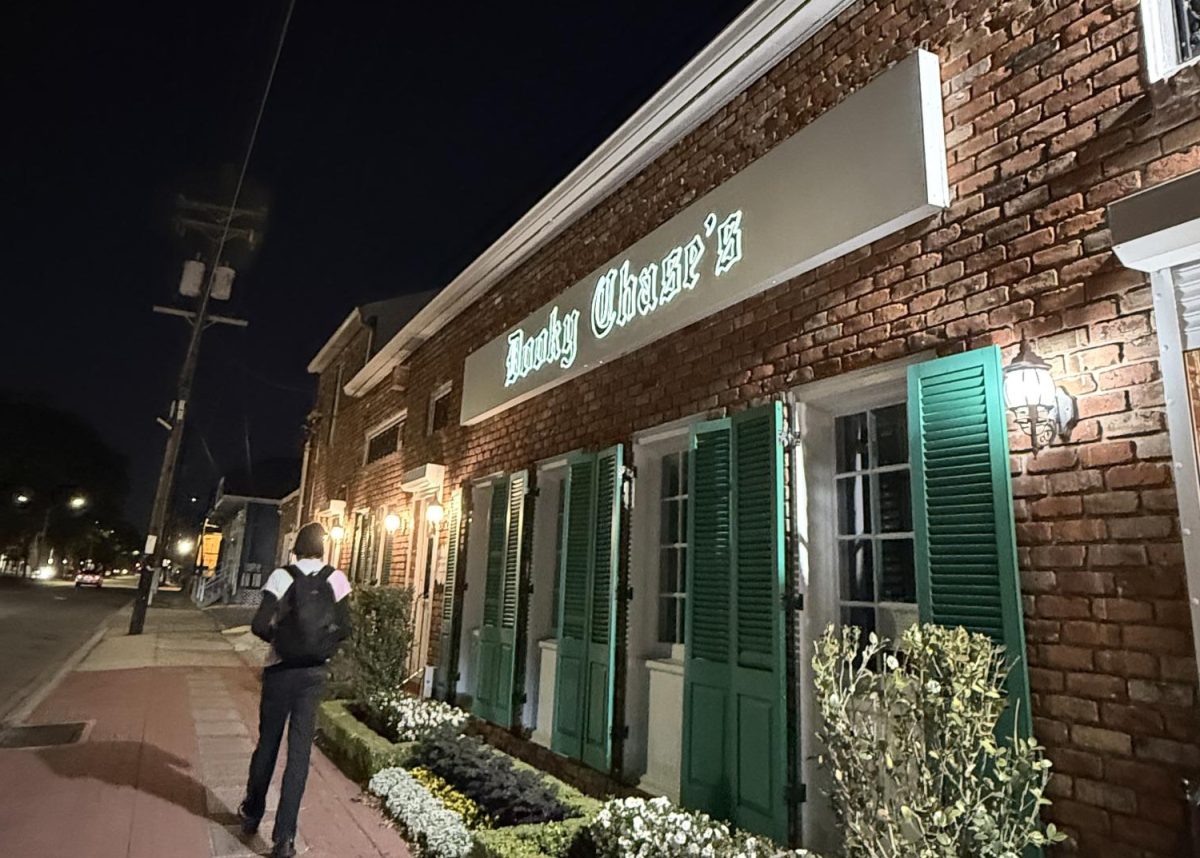
A shooting at the historic Dooky Chase’s restaurant has shaken New Orleans, raising safety concerns while community members rally to protect the landmark’s legacy.
On Jan. 16, 2026, the violence left 19-year-old Kareem Harris dead and three tourists injured. The suspect, 18-year-old Makahi Kelly, allegedly entered the Orleans Avenue establishment and opened fire, shocking the city and drawing attention to public safety in one of its most culturally significant neighborhoods.
When addressing the media after the incident, Mayor Helena Moreno emphasized that the restaurant itself was not the target.
“In 85 years, this establishment has never experienced anything like this,” Moreno said.
Her comments sought to reassure the public and protect the reputation of a business deeply woven into the cultural fabric of New Orleans.
But how has the shooting affected the restaurant’s popularity? Professor C.W. Cannon of Loyola University believes that the shooting will not have a significant effect on the restaurant’s popularity.
“Violent incidents typically do not have much effect on Orleans Parish residents, who know that crime is an unfortunate fact of life in the city. Locals take these waves of violence in stride and continue to participate in cultural life, including visiting institutions like Dooky Chase’s,” he said.
Cannon added that the perception issue is often more significant for tourists or suburban visitors, who may be less familiar with the city’s realities.
For some Loyola students, the news hit close to home. Eryn Goines, a sophomore, said she learned about the shooting before it was reported by news outlets.
“One of my family friends was working at the restaurant that night,” Goines said. “He reached out to my family to let us know what happened and to inform us that he was okay, but he is just in shock.”
Goines said she was very familiar with the restaurant long before the incident.
“My family has eaten dinner there multiple times, and we have enjoyed ourselves each time,” she said. “Dooky Chase has so much history and culture in their walls, and I will forever recommend it to anyone visiting New Orleans.”
Despite the tragedy, the shooting has not changed her perception of the restaurant.
“The shooting has not changed my opinion on Dooky Chase at all,” Goines said. “After all of the years that Dooky Chase has had their doors open, nothing like this has happened until that night.”
When asked whether she would feel comfortable dining there again, Goines was clear.
“Yes, I would still feel comfortable eating at Dooky Chase,” she said. “It was an unfortunate incident that took place at the wrong time.”
Another Loyola student, Angelica Petit, a freshman, said she first learned about the shooting through social media.
“I heard about the shooting. I saw it on empoweryounola and my friend works there and said what happened,” Petit said.
Petit said she had dined at the restaurant before and associates it strongly with New Orleans culture.
“It’s probably the only restaurant gumbo that I like,” she said. “Dooky Chase and the late Leah Chase inspired Disney’s first Black princess, Tiana. That representation is important to me as a local because it highlights New Orleans’ culture and showcases all our city has to offer.”
The shooting did not alter her view of the restaurant.
“No, the shooting didn’t change my perception because people in the restaurant were overall safe and the area isn’t that bad,” Petit said.
She added that she would still feel comfortable dining there.
“The restaurant area is overall safe and in today’s world shootings can happen at unexpected locations, but it’s unlikely it will happen in the same location this close to the first incident,” she said.
Petit also emphasized the importance of continued support for historic Black-owned businesses.
“At the end of the day this is history and supporting historic Black businesses helps with spread of knowledge about Black history and that way it won’t be forgotten,” she said.
Dooky Chase’s, founded by Leah Chase and her late husband, Edgar Lawrence “Dooky” Chase Jr, has been a cornerstone of New Orleans’ cultural identity for decades, hosting civil rights leaders, artists and politicians.
Professor Cannon explained, “Black-owned legacy businesses like Dooky Chase’s play an essential role in New Orleans’ cultural identity. Both the restaurant and the city’s tourism agencies regularly highlight its historic role in Black leadership. Establishments like this are central to understanding the city’s post-Civil Rights cultural acknowledgement, which increasingly emphasizes Black contributions.”
Despite the shock of the shooting, the restaurant’s reputation appears intact, supported by a local community that understands crime as an ongoing reality rather than a reflection on a historic institution.
As Cannon noted, “Crime is a reality of life in New Orleans and will remain so, but locals continue to engage with cultural institutions like Dooky Chase’s. The restaurant’s legacy and significance in Black history endure, particularly during Black History Month.”