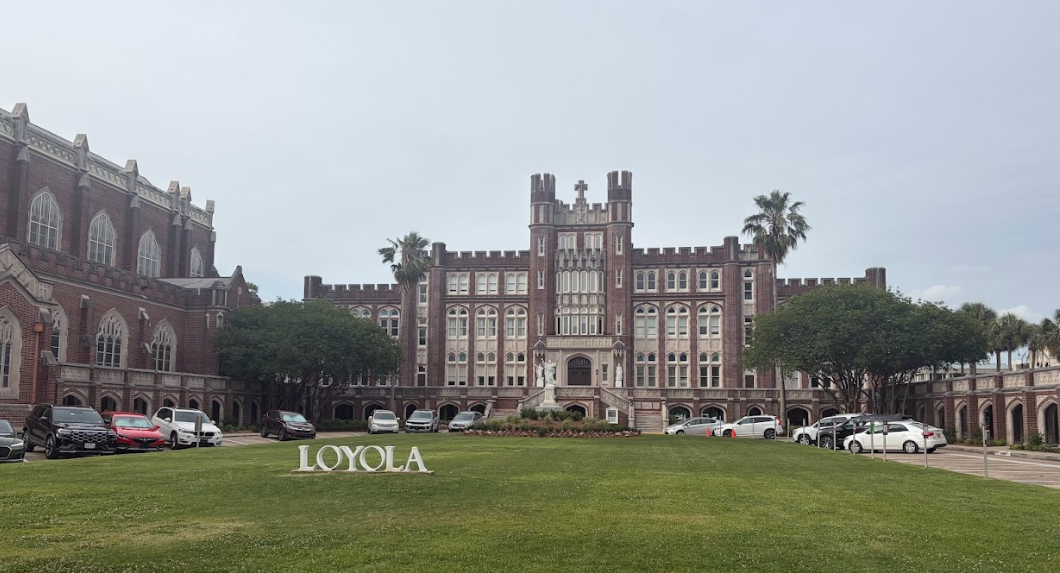
Louisiana lawmakers are pushing a bill that would protect the free speech of college and university professors by financially penalizing universities for suppressing or retaliating against the speech of its faculty.
House Bill 1008 was sponsored by Louisiana Representative Chuck Owen in an effort to increase academic free speech without fear of university intervention. This bill would protect the faculty of Louisiana universities and colleges in both academic and nonacademic settings. The bill would go on to protect the speech of whistleblowers within the institutions.
Walter Block, an economics professor at Loyola, has experienced retaliation against his speech during his time at Loyola and felt limited in what he could say.
While Block explained he is not an absolutist on free speech, he does think it is important to uphold. However, he said he is skeptical of exercising free speech even if the bill is enacted into law due to past incidents regarding his speech.
“I’ve been penalized in the past for using the word ‘cotton’ innocently, also for the word ‘Oriental.’ I was compelled to endure sensitivity training for using words like ‘cotton’ and ‘Oriental.’ A waste of my precious time. A violation of my free speech. A violation of my academic freedom,” said Block.
Other professors at Loyola are more idealistic about the bill, with hopes of academic exchanges among students and faculty.
Julia Miller, a professor at Loyola with a focus on education, thinks the bill is beneficial to both students and professors who want more dialogue around topics that are considered controversial.
“I have seen a chilling effect on teachers in the k-12 grades when regulations have gone into place banning discussion of so-called divisive concepts, and that has caused teachers to pull books off their shelves or feel discomfort with having conversations about gender identity or racism. Or, you know, established parts of history like slavery and the fact that they are bad, has become divisive,” Miller said.
Miller recalled the limited speech during her time teaching k-12 as a warning to what could happen by limiting speech in universities.
“If that creeps into higher education, which I believe it’s starting to, that is a really dangerous precedent to set,” Miller said.
Patricia Boyett, former history professor and president of Loyola’s American Association of University Professors chapter, has also been concerned about the restriction on free speech in regard to teaching “divisive concepts” and what it could mean in higher education.
Boyett explains the importance of higher education to America as a democratic nation and how limiting universities could create a politically uneducated America.
“Universities serve as one of the great pillars of a representative democracy, as one of their primary purposes is to pursue a deeper and more comprehensive understanding of the human condition, human developments, and human advancements by seeking the facts through research, by contemplating the meaning of the evidence, by engaging in debates over diverse perspectives, and by discerning ideas to form educated opinions,” Boyett said.
According to Boyett, exposure to opinions and “divisive” concepts is essential to keeping America’s democratic system and an informed society.
“All these elements are vital to a representative democracy in which informed citizens engage in their civic duty of investigating and discerning the ideologies and policy plans of candidates and determining which candidate aligns most with their vision for America. When politicians or other powerful leaders seek to ban books, control curriculums, and deny academic freedom, they are divesting not only students, faculty, and staff access to the knowledge, but they are depriving people across the nation from accessing such knowledge through published works, public talks, scientific studies, expert witnesses in legal cases, expert contributions to various governing agencies and private think tanks, etc.,” Boyett said.
Boyett believes having the ability to speak freely in an academic context allows for a debate-based democracy rather than a compliant dictatorship.
“Only dictators seek to control access to knowledge and to deny the right to free speech as they aim to force conformity of thought. Diverse views and debate are vital to any healthy democracy,” Boyett added.