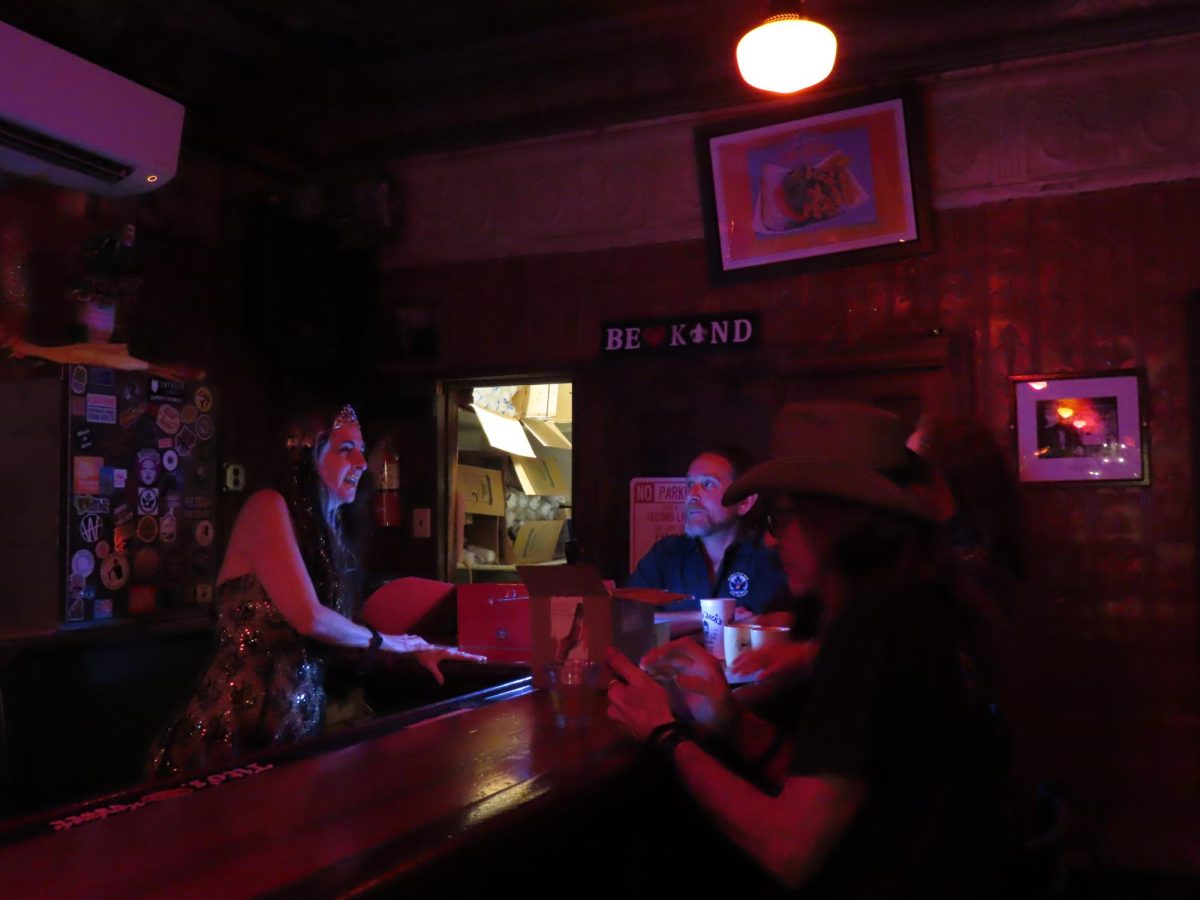
Tracy Camp “doesn’t give a f—-” what people think. That’s why she chose to call her dance class “Twerk Church” which starts its new sequence this Sunday.
The dance class anchors a self-love world she’s built with twerking at its center. In her classes, Camp pushes the status quo, combining something taboo with her “ I don’t give a f— energy.” There, she shows women how to thrust their hips and get low, a practice she says she teaches to empower her students and to protest a society she says sees the dance as overtly sexual.
“It’s almost like they think it’s for the male gaze when really it’s for the female soul,” Camp said.
According to a meta analysis published in Frontiers in Psychology, dance significantly improves well-being, and Camp’s students call their visits to Camp’s twerking world healing.
Josie Parks and Linnea DeVange have both taken Camp’s Twerk Church class and have many praises for her.
“It has made me feel so comfortable in my own skin,” Parks said.
She added that Camp makes the class very engaging and her confidence is contagious.
“I gather that she has done a ton of work on herself, and I think that really translates into her teaching,” Park said.
DeVange knew Camp prior to taking her class when they met in a book group centering around the Artist Way, a 12-step program by Julia Cameron designed to help with creativity.
“Tracy is someone who thinks creatively in the same way I do. And I think I’ve learned a lot about how to practice creativity in a healthy way from her,” DeVange said.
But Camp’s journey didn’t come without setbacks.
Camp is a Philadelphia native who moved to New Orleans at 17. She attended University of New Orleans for film and theater, and it was here that she struggled with addiction.
“I went to UNO and honestly the trajectory was I became addicted to drugs. And I was like, okay, I guess I’m just gonna stay in New Orleans and do drugs. And that’s what I did,” Camp said.
She graduated in 2013, but said her life really started a few years later when she got sober.
“So it was just lucky by circumstance that I ended up getting dropped here, and then ended up getting trapped here for a little while, and then fell in love with it. Almost like an arranged marriage, ” Camp said.
She recalls dancing her whole life, but not professionally until she was 19. The beginning of Camp’s artistic career in New Orleans was in live performances for the corporate party scene.
“New Orleans is a tourist industry. So people will hire me to flounce around and entertain them,” Camp said.
The dancer didn’t begin formal dance training until right before COVID-19 when she started taking twerk classes herself.
“I was like, ‘I have this God given talent of shaking ass,” Camp said.
She shared that she became determined to perfect the craft and hone her technique.
“I wanted to be the best. That was my goal. I would spend hours and hours just throwing a– and really like trying to be perfect,” She said.
Camp said what she loves about twerk is that it helps her zoom out of her natural pessimistic self.
“When I’m twerking I can be like, ‘Wait, life is silly, you’re hot, you can be stupid, you can shake this all away,” Camp said. “It’s really hard to twerk and not be happy.”
While twerking has always made Camp happy, it was a journey getting to where she is now. Before beginning her classes she taught kids at theater camps through Camp 504 and Community Works in New Orleans.
“That was the best, it was super rewarding,” she said. “But, it got to the point where I was like, I love teaching kids but now it’s time to do what you really want to do, be with the women and just get sexy”
Camp said she has many dreams in her life but this was one of the biggest.
“I really, really wanted to have a weekly short class where I did choreography. That was very important to me to do at some point in my life,” Camp said.
Camp found a studio, made flyers, posted them on Instagram, and her classes sold out. She said some have pushed against her teaching other women how to twerk saying it’s unethical for a white woman to make money off black culture. But Camp thinks through hard work she has earned her right.
“I’ve spent countless hours perfecting a skill. Who cares that I’m white? I’m like a representative of New Orleans at this point,” Camp said.
Camp wants her class to be a space where you don’t have to take yourself too seriously, and everyone there feels vulnerable together. She says that it’s not only good for your soul but also your hip health.
“Get what you want from it. I don’t care. I look at it as freedom and joy, there’s just so many advantages. Like even your hips really need a lot more attention,” Camp said.
She went on to share that twerking has played many roles in her life but, at this point, she doesn’t view it as something sexual.
“For me it’s about the community that I’ve built. It’s been a way for me to connect with other women at this stage of my life,” Camp said.
Camp shared that to her, twerking is a pathway to letting go of unwanted energy in the body and the mind.
“I think of it as moving through fear, moving through doubt, and trusting yourself,” Camp said.
She hopes that all people feel welcome in her class and encourages them to try it at least once.
“If you feel the desire to throw a–, but are afraid to do so, Just f—ing give it a shot, especially if you want to do it in my class and have it be really fun,” Camp said.