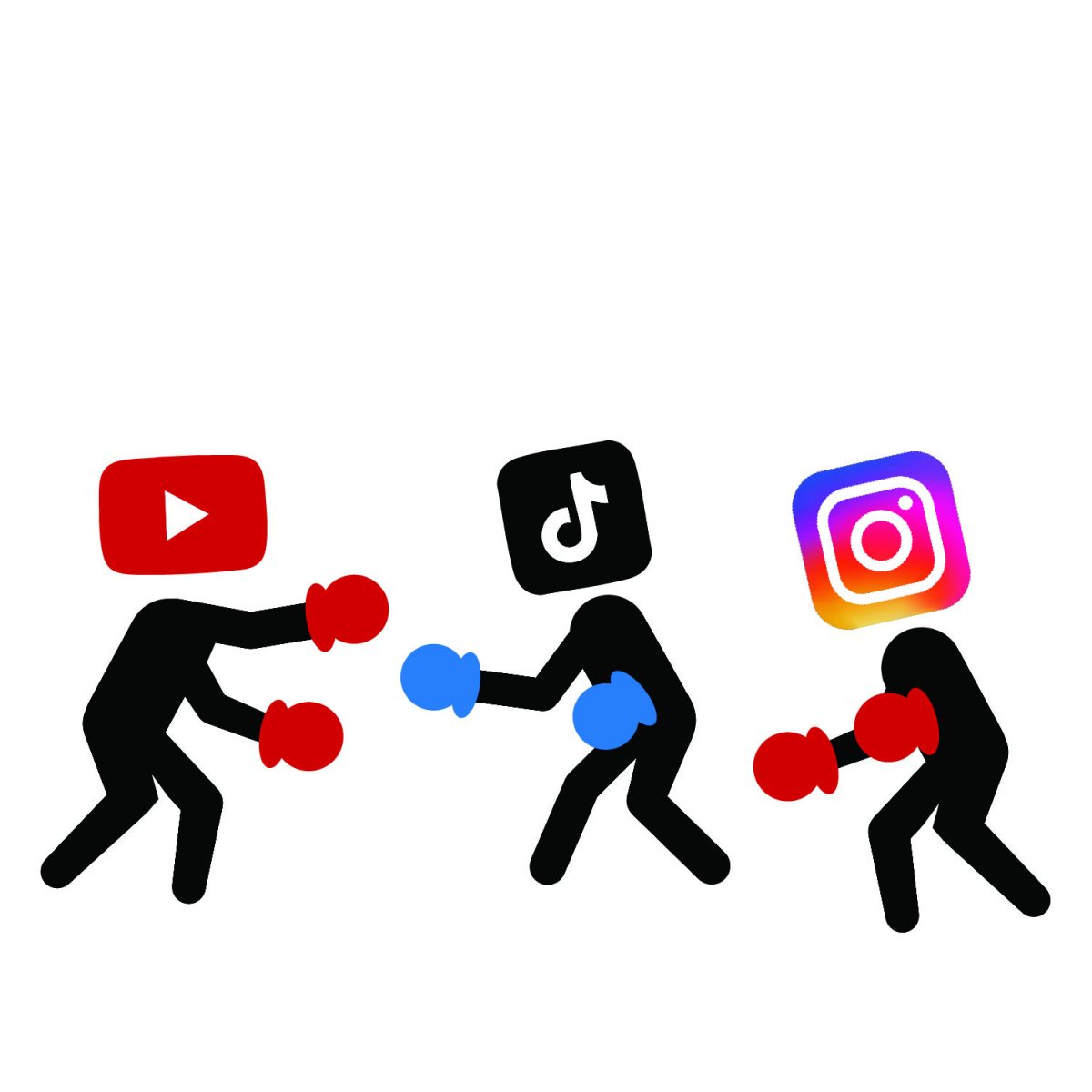
Our generation is unique because we’ve lived through the transition from analog to digital technology. We have had front row seats to the rise and fall of various social media platforms prioritizing short form content. First came Vine, then Musical.ly, and now we have TikTok, as well as its seemingly endless stream of Zuckerbergian cousins (Zuckerbergian, because they are all products of Mark Zuckerberg’s Meta internet. Call me something of a witty neologist.) Take Instagram Reels, for instance, what most would call TikTok’s main competitor.
When Reels debuted in 2020, most shrugged it off as a TikTok copycat. No one took it seriously, so the discourse surrounding platforms playing tag with one another slithered its way back into the cultural zeitgeist.
Last year when rumors surrounding a TikTok ban started to swirl–and when it actually happened for about 14 hours–, tons of people made the switch over to Reels. Since then, I’ve found that tons of my peers have remained faithful to Reels, even preferring its algorithm to TikTok altogether.
Even some of my dear colleagues in the newsroom continuously prioritize Reels over Tiktok. For fun, I asked Sophia Renzi what her thoughts were while I was jotting down ideas.
Here’s what she had to say: “Reels, you have an escape from the doomscroll, whereas Tiktok…there is no escape. On Instagram you can switch to messages or your feed. Tiktok, you can’t.”
She makes an intriguing argument, but I digress that Tiktok is superior because of its algorithm. I think it’s super cool that everyone’s feed is attuned to them, like mine is all about UMiami YikYak drama and The Real Housewives of Beverly Hills—super hard hitting stuff. My dad’s TikTok, on the other hand, is chalk full of AI slop that only further amplifies the red pilling effect.
Maybe that’s a testament in itself as to why TikTok can be harmful, but every time I go on Reels it is just AI slop. It’s all over Reels regardless of what you interact with, but at least with Tiktok, the algorithm helps you pick and choose what you wish to interact with.
Also, the posts on Reels are just reuploads of TikToks. I spoke to my friend Ana Paz about this debacle and she agreed with me, saying that “Reels make you stupid.”
All I have to say about that is twofold: damn straight.
I don’t mean to disrespect any faithful Reels fans out there though. This is nothing but silly conversation based on personal preference. In order to qualify, here’s an anecdote: today I was in the Trader Joe’s checkout aisle and the cashier spoke about something that came on his feed. “Reels or TikTok?” I asked, for research purposes. He generally prefers Reels–but what else can you expect from a Trader Joe’s employee clad in hipster glasses? It was like I was in another era, one of Portland, Oregon and millennial optimism.
Regardless, an objective truth that I’ve discovered from this fiasco is that we are collectively obsessed with short form content. I think it might be ruining our lives, expanding our social networks so much that we become disenchanted way faster—at least that’s what Georg Simmel, a German sociologist, predicted. Oftentimes scrolling on these apps begins to feel like a chore. Sometimes before bed I’m like, “oh, it’s 11:00 o’clock, time to go on Tiktok.” I don’t even want to, but the behavior feels compulsory at this point.
If I were a better human being, I would end this by writing off short form content apps altogether, urging you to go live in the moment. I’d stand on a soapbox preaching about ‘being present.’
But I’m not, so here’s another counter argument: Simmel was right, these are indeed our new social networks, so we must adapt to them. Part of that can be beneficial and even connective. Our dialect has changed because of consuming similar content at lightspeed—neologisms, inside jokes, and new ways of communicating have been born from these platforms. Friendships have blossomed because people have seen the same videos, no matter where they came from. Not only that, but protests and boycotts have been organized on these apps. Little corners of the internet focused on social change are tucked into the algorithms we hold so close to our hearts.
My final stance on this argument is a qualifying one. Both are fine for different reasons, but must be used in moderation, like any other addicting thing. In one of my writing classes the other day, the professor was talking about disrupting your daily routine in order to experiment with defamiliarization, so I showered in the dark and turned my phone off before bed. The result was that I could take a step back and analyze social media for what it is at a basic level, how it functions in my life, as well as how ways of communicating are heavily reliant on it. I was able to read poetry and cry about it. I haven’t done that in a long time.
Whether you’re a devout Instagram Reels user or a TikTok faithful, it does not matter. Be weary of your screentime, like the studies say.
And for the love of God, please don’t use Youtube Shorts or Facebook Reels. That’s where we begin to run into serious issues: like low-quality, recycled content. Rest assured, if you want to find A.I. slop, that’s where you go.