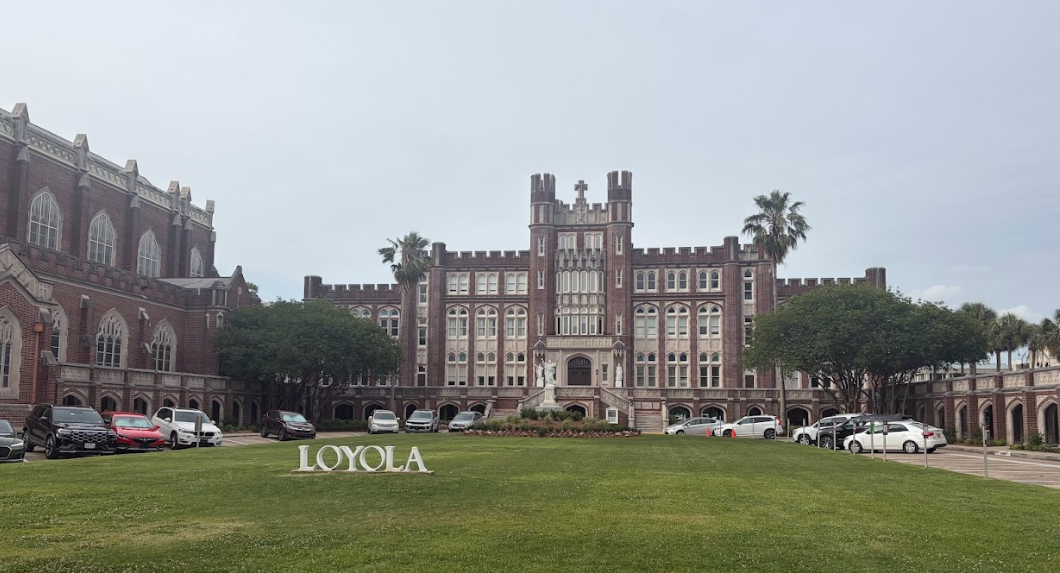
Loyola’s recent email about the federal One Big Beautiful Bill Act (OB3) might read like just another administrative update, something easy to skim or an email to delete. But this is bigger than that, and treating it like just another email is exactly how issues like this slip by without real attention.
Starting July 1, 2026, federal loan limits will tighten, graduate students will lose access to Grad PLUS loans entirely, and many students will find themselves hitting borrowing caps sooner than expected. What looks like a policy change on paper is, in reality, a shift that could determine who gets to stay in school and who doesn’t.
This didn’t happen overnight. Over time, the federal government has steadily stepped back from its role in funding higher education, placing more and more of the burden on students and their families. At the same time, tuition hasn’t slowed down, and the cost of living continues to rise. Rent, groceries, books, everything adds up. The gap between what college costs and what students can realistically afford is only getting wider, and policies like OB3 don’t close that gap.
They expose it, and in some ways, they deepen it. When that gap widens, it doesn’t hit everyone the same. It never does.
Students pursuing majors that aren’t traditionally labeled as “professional” often feel it first and hardest. Fields in the humanities, social sciences, and liberal arts, the very fields Loyola prides itself on, don’t always come with immediate high-paying career paths, but they are essential. These are the fields that produce journalists who hold power accountable, lawyers who advocate for justice, policymakers who shape legislation, and thinkers who challenge the status quo. When access to funding shrinks, it quietly reshapes who can afford to study these disciplines at all. What should be spaces of intellectual exploration start to become spaces filtered by financial privilege.
And that shift doesn’t announce itself loudly. It happens slowly, through policies like this, until one day the question isn’t just what you want to study, but whether you can afford to study it at all.
So yes, Loyola is right to urge students to review their financial plans. Students need to understand their loan limits, talk to financial aid advisors, and prepare for what these changes mean in real terms. But stopping there misses the bigger picture. This is not just about budgeting better or planning ahead. This is about a system that is changing in a way that puts more pressure on students while offering them fewer options. That’s not just a financial issue. It’s a political one.
That is where the midterm elections come in, whether students are paying attention to them or not. It’s easy to treat midterms as less important than presidential elections, something that can be ignored or pushed aside. But decisions like this don’t come out of nowhere. They come from the people elected into these positions and the priorities they bring with them. Financial aid policy is not abstract. It shows up in your tuition bill, your loan limits, and your ability to stay enrolled. If students are directly impacted by these decisions but don’t show up politically, then there’s very little pressure for those decisions to change.
At the same time, institutions like Loyola cannot simply point to legislation and move on. If federal support is shrinking, then universities have a responsibility to respond in ways that actually support their students. A school that emphasizes Jesuit values and a commitment to justice can’t ignore policies that limit access to education. That commitment has to mean something in practice. Supporting students means more than sending out emails and linking FAQs. It means being transparent, expanding support where possible, and recognizing that for many students, this isn’t just about planning, it’s about whether staying here is even financially possible.
What happens next depends on how students respond. This is a moment to pay attention, to ask questions, and to demand more, from both the university and the systems that shape it. It’s also a moment to recognize that something as personal as paying for college is deeply political. The decisions made at the federal level don’t stay in Washington. They show up here, in classrooms, in financial aid packages, and in whether students can continue their education.
If there is a starting point for change, it is here. It starts with understanding what is happening and refusing to treat it as normal. It continues with speaking up, asking harder questions, and pushing for better answers, and it doesn’t stop on campus. It extends to the ballot box, to the spaces where these decisions are actually made.
Because when policies begin to decide who can afford an education and who can’t, staying silent isn’t neutral. It’s part of the problem.