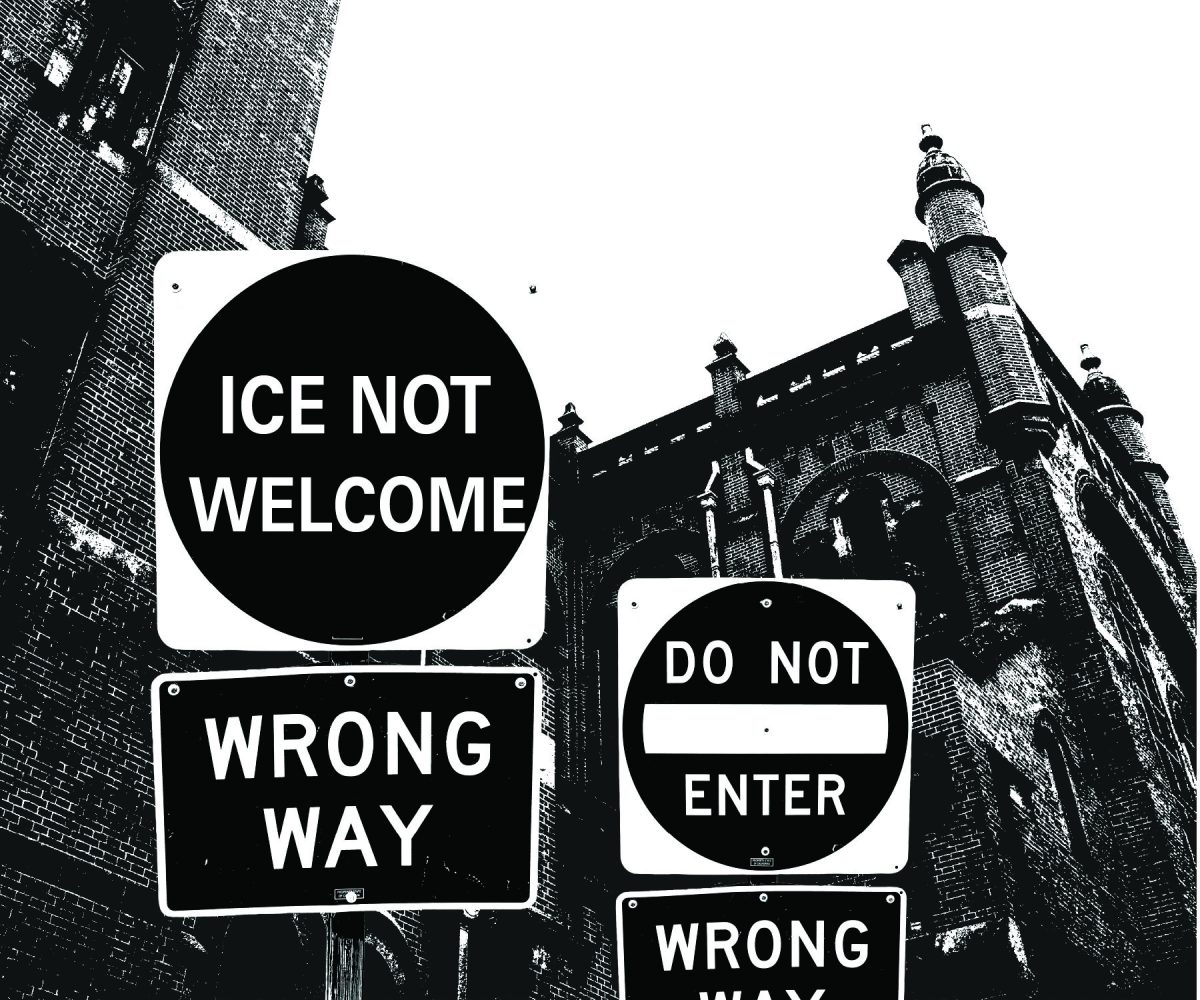
When Loyola announced the start of the Immigration Task Force in February of 2025, it sounded like the kind of response students had been asking for. It suggested movement, attention, maybe even protection. On paper, the structure is there – administrators, campus police, mission leaders, legal counsel, all gathered to respond to an issue that has become increasingly real for students across campus and the country.
But for many students, that announcement came and went quietly. Since then, the silence has been louder than the response.
Right now, Loyola asks students to trust that something is being done behind the scenes. But trust is hard to hold onto when you don’t know what’s actually happening. Students don’t know how often the task force meets, what policies it has reviewed, or whether any new protections are even being considered. There’s no clear way to reach the group, no consistent updates, no real sense of what has changed since its creation. For students whose lives are already shaped by uncertainty, that lack of clarity feels like being left in the dark.
And in a moment like this, darkness doesn’t feel safe.
That uncertainty is reflected in what student leadership is hearing as well. When asked about student understanding of the task force, Student Government Association President Nicholas Keen said that there is currently “limited student awareness regarding the specific role and function of the University’s Immigration Task Force.”
While the Task Force plays an important role, Keen noted that its work is “not widely visible to the general student body,” even as it reviews policies and prepares institutional responses to immigration-related issues.
He added that this lack of visibility is not necessarily due to a lack of effort, but rather the nature of the group itself, which operates within legal and administrative frameworks that do not always translate into clear, student-facing communication.
Still, for students, the distinction matters less than the outcome: they don’t know what protections exist or how decisions are being made.
Keen also pointed to the resources that are currently available to students, including the Center for International Education, the Stuart H. Smith Law Clinic and Center for Social Justice, and the University Counseling Center, which offers trauma-informed and multilingual support. SGA, he explained, has worked to help direct students toward these resources and facilitate conversations when concerns arise.
But access to resources is not the same as clarity from the institution itself.
Loyola’s identity is built on Jesuit values, especially cura personalis, care for the whole person. It’s a phrase the university uses often, one that shows up in mission statements, speeches, and even in classes. But what does that actually look like when students are worried about something as serious as immigration enforcement?
Lindy Brasher, Loyola university’s minister for social justice, frames it as something much deeper than general support.
“Within Ignatian spirituality, cura personalis calls us to care for the whole person by attending to the full reality of each student’s life,” Brasher said.
That reality, she explains, isn’t just academic, it’s emotional, familial, legal, and communal.
For immigrant students, those layers aren’t theoretical. They show up in everyday life, in conversations with family and in the news. Brasher emphasizes that care, in this context, means more than acknowledging that reality. It means walking with students through it.
“Immigrant students are not problems to be solved but persons whose lives reflect both resilience and grace,” she said.
But care that you can’t see or understand starts to feel a lot like absence.
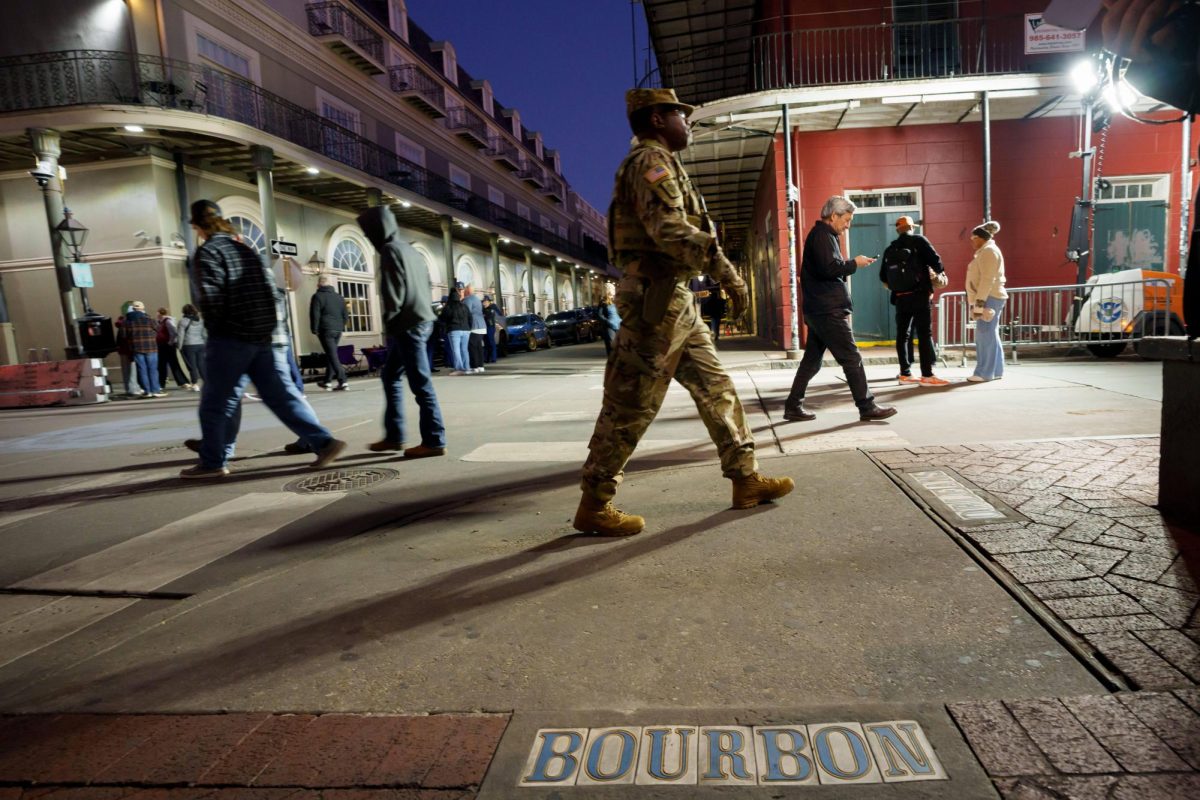
The university has offered at least one clear procedure: if someone claiming to represent a government agency approaches campus, students should contact Loyola University Police, who will verify credentials and legal authority. But for students thinking about worst-case scenarios, it doesn’t answer the bigger question, what will Loyola actually do to protect them before it gets to that point?
Because these situations don’t unfold slowly or predictably. They happen fast, sometimes in a matter of minutes, often without warning. Immigration enforcement has, in recent years, been carried out in ways that feel abrupt and, at times, aggressive, people taken from homes, from campuses, from everyday spaces where they once felt safe. In 2025, Palestinian activist and Columbia University graduate Mahmoud Khalil was taken into custody by federal agents despite being a lawful permanent resident. His arrest didn’t happen in some distant, abstract setting. It happened in student housing, in a place that was supposed to feel secure.
Moments like that don’t leave time to think through procedures or wait for institutional responses. They raise an unsettling reality: if something like this were to happen here, would Loyola be ready?
Loyola can’t simply declare itself a sanctuary campus without consequences. Federal funding, including financial aid that many students depend on, could be at risk. The university is operating within legal and financial boundaries that aren’t easy to ignore. Brasher acknowledges that balance as part of a larger process of discernment.
“The work is not about choosing between values and constraints,” Brasher said, “but about faithfully navigating their intersection in a way that reflects the Gospel.”
But navigating does not mean hiding it.
When asked how Loyola could improve transparency, Keen pointed to a “clear opportunity for the university to strengthen transparency and student understanding regarding the Immigration Task Force and its work.”
He emphasized the need for increased student-facing communication about its role, as well as “clear, accessible updates that translate legal and administrative processes into student-relevant information.”
He also noted that while formal student representation on the Task Force may present challenges, “there are still meaningful ways to incorporate student voice.”
If concerns grow, Keen said SGA is prepared to advocate for increased representation and ensure those concerns are brought to university leadership.
That matters because Loyola already prioritizes student representation across many institutional committees. The question now is whether that same commitment can extend to an issue that directly affects student safety and well-being.
Students aren’t asking Loyola to make itself a national headline or challenge federal policy. If anything, there’s an understanding that some level of discretion matters. Brasher points out that protecting students sometimes means not drawing unnecessary attention to them, emphasizing that “respecting privacy and protecting students from additional vulnerability reflects a deep respect for human dignity.”
Still, discretion should not come at the cost of communication.
Because right now, it’s not clear whether Loyola is doing everything it can, or just what it feels safe doing.
And that uncertainty matters. It shapes whether students feel like they belong here, whether they trust the institution that’s supposed to support them, whether “care for the whole person” is something they actually experience or just something they hear.
What students are looking for isn’t unrealistic. They want to understand what the Immigration Task Force is actually doing. They want clearer communication about policies that affect their safety. They want to know where they stand.
More than anything, they want to feel like they’re not navigating this alone.
Loyola has taken the first step by recognizing the issue. But recognition is only meaningful if it leads somewhere.
Because at a school that prides itself on caring for the whole person, care shouldn’t feel hidden.
And right now, it does.