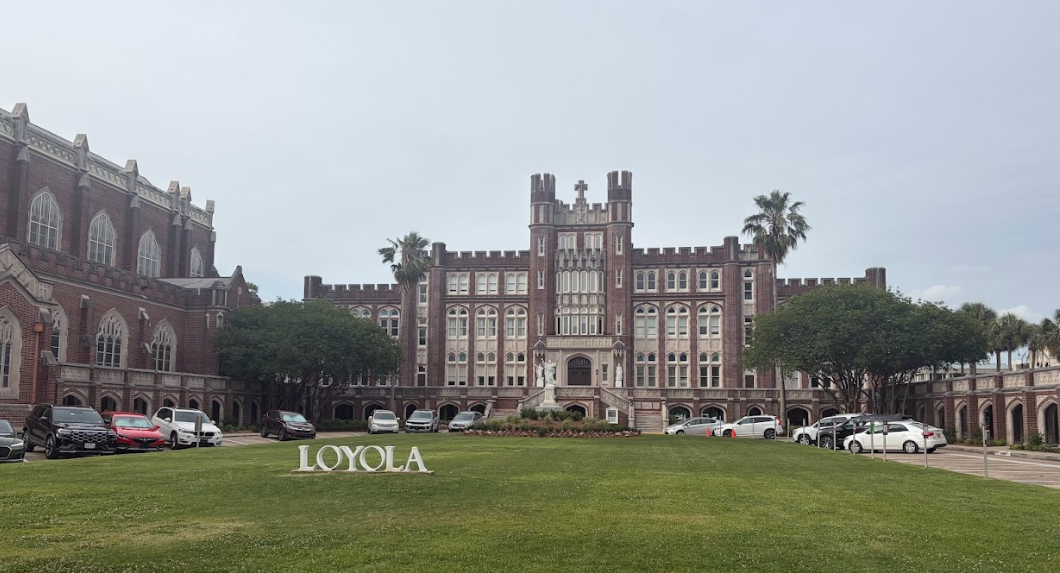
At Loyola, “Jesuit values” are everywhere. They’re in brochures, on banners, in speeches, in mission statements. Words like justice, community, care for the whole person, and magis are repeated so often they start to feel like part of the campus landscape itself.
But values are not meant to live on banners. They are meant to live in action, to live by, to be seen everyday and right now, there is a growing sense that at Loyola, those two things, words and action, are no longer aligned. This moment isn’t about Jesuit values at all. It’s about whether the university is actually willing to follow them.
The university says it is committed to its faculty and staff. It points to budgeting processes, incremental raises, and one-time bonuses as signs of progress . But if you listen closely to the people who make this university what it is, a different story begins to emerge.
A story of professors who have gone years without meaningful compensation. A story of promises made during times of crisis, promises of rebuilding, of restoration, that many feel have never truly been fulfilled. Perhaps most troubling of all, a story of a university that continues to expand in some places, while asking those at its core to keep sacrificing.
Here is the truth Loyola cannot afford to ignore: Students do not come here for administrative structures.
They come here for professors. They come for the people who challenge them, mentor them, laugh with them, push them, and shape the way they see the world. Ten years from now, no student will remember a budget report. They will remember a professor who stayed after class to help them understand something. A professor who believed in them when they didn’t believe in themselves. A professor whose jokes, whose passion, whose humanity made learning unforgettable.
That is Loyola. That has always been Loyola.
Yet, those very people, the ones who define all of our Loyola experiences, are the ones increasingly being asked to do more with less. More work, responsibilities, and expectations.
All while being told that meaningful change must come slowly, incrementally, eventually.
Jesuit values are not incremental. They are not something you invoke when convenient and set aside when difficult.
If Loyola truly believes in cura personalis, care for the whole person, then that care must extend to the people who give everything to this institution. If Loyola truly believes in justice, then it must confront inequities, not obscure them. If Loyola truly believes in community, then it must listen to that community, not just speak for it.
There is a deeper contradiction at play here.
The university asks its faculty and staff to embrace magis, to do more and to be more. But what happens when that call is not reciprocated? When “do more” becomes a one-sided expectation? When dedication is met not with support, but with silence or delay?
At some point, magis stops being a mission and starts becoming a burden. This is not an argument against Loyola. It is an argument for what Loyola claims to be. This university has something rare: a community of professors who stay not because they are paid the most, but because they believe in the mission.
Who stay because they love their students.
Who stay because they believe in what Loyola could be.
But belief alone cannot sustain an institution. Eventually, belief needs to be met with action.
Loyola often speaks about forming students who will go out and create a more just world.
But that work does not begin after graduation.
It begins here. In how the university treats its own people. In whether it lives up to the values it teaches. In whether justice is something practiced internally, or simply projected outward.
If the lesson is that values can be spoken without being practiced, that justice can be delayed, that voices can be heard but not acted upon, then that is the lesson that will last.
Loyola still has the opportunity to realign itself with the very principles it was built on.
To match words with action.
To treat its faculty not as expendable, but as essential.
To remember that the heart of this university is not in its branding, but in its people.
Jesuit values are not just something you claim, they are something you prove and live by.