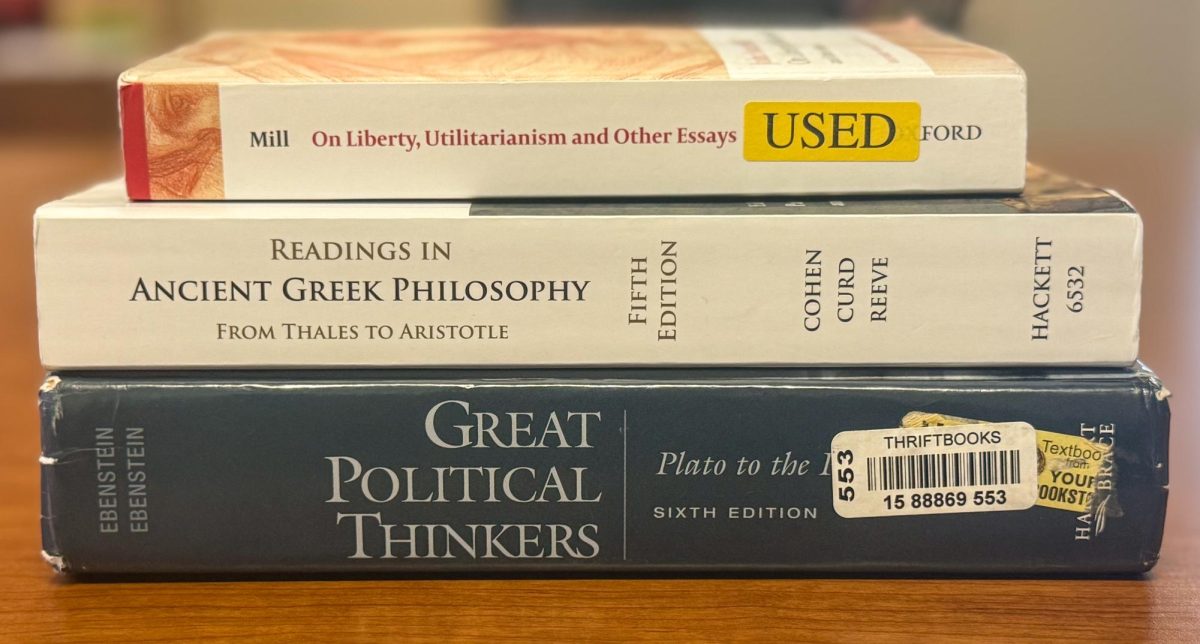
Of every irrational student opinion, one of the most common is that getting a degree in philosophy is, wealth-wise, a futile endeavor. How could a philosophy degree possibly provide the skills required to get a job in contemporary society? Why would a student spend tens of thousands of dollars to study something which is no longer relevant? Philosophy is treated as an arcane practice; a stagnant discipline which has not developed since the scientific revolution rendered it unnecessary.
In the common perception, the days of needing to know Socrates and Aristotle are dead. If there is anything to learn, AI Socrates will surely educate them just as well. For a student body obsessed with ROI, the equation seems simple. Philosophy provides none.
But of course, you don’t need to participate in such irrational beliefs. You see through the facade of popular opinion, and understand the value of majoring in critical thought. You are already aware that according to the Association of American Medical Colleges, philosophy majors have the highest acceptance rate to medical school of any major, at 50%. You already know that, according to the University of Clemson, philosophy majors on average score higher on the GRE and LSAT than any other major.
In reality, that philosophy is perhaps the most valuable major one could study in undergrad is a notion only denied by the ignorant. I will say the cliché if only because it’s true: philosophy teaches you how to think. And it does so in a very specific way.
What is the purpose of studying Descartes, Hume, and Kant? Of reading Kierkegaard, Nietzsche, or de Beauvoir?
Firstly, the philosophy major does this because it trains their ability to quickly understand complex information. The practice of analyzing esoteric texts entails them to think in new ways; to reconsider a subject as they had never seen it before. In order to comprehend these conceptual systems and logical dilemmas, the philosophy major must learn to question their own fundamental assumptions and attempt to fully inhabit the mind of another.
Secondly, the philosophy major must learn to turn their newly practiced critical thinking skills into written analysis. That the large writing requirements are perhaps the greatest turn-off for potential philosophy majors is regrettable, for it is undoubtedly its chief asset. In the act of translating reason and critical thought into a written argument, the philosophy major acquires the capability to systemize their beliefs, and accurately communicate them to others. Not only are you taught how to critically interrogate both your own and others’ ideas, but how to effectively transmit them to a rational (and hyper-critical… so don’t get it wrong!) audience.
With the knowledge that philosophy majors are heavily trained in methods of critical thinking, and are able to produce succinct and sufficient explanations of complex ideas, it should be no surprise that they often excel in whichever discipline they find themselves in. And indeed, the salary numbers back this up, with the American Philosophical Association reporting that over their career earnings, philosophy majors make more than any other humanities major. Further, according to the Wall Street Journal, philosophy majors will monetarily outperform majors in Finance, International Relations, Marketing, Business Management, Nursing, Biology, and Health Care Administration.
But of course, you already knew this. You already know that what is most important about undergrad is not necessarily the content of your major but the skills it leaves you with.
What skill could be more important than a degree in thinking?
If nothing else, a philosophy degree brings supreme self confidence. Lord knows that I think that I think better than you.