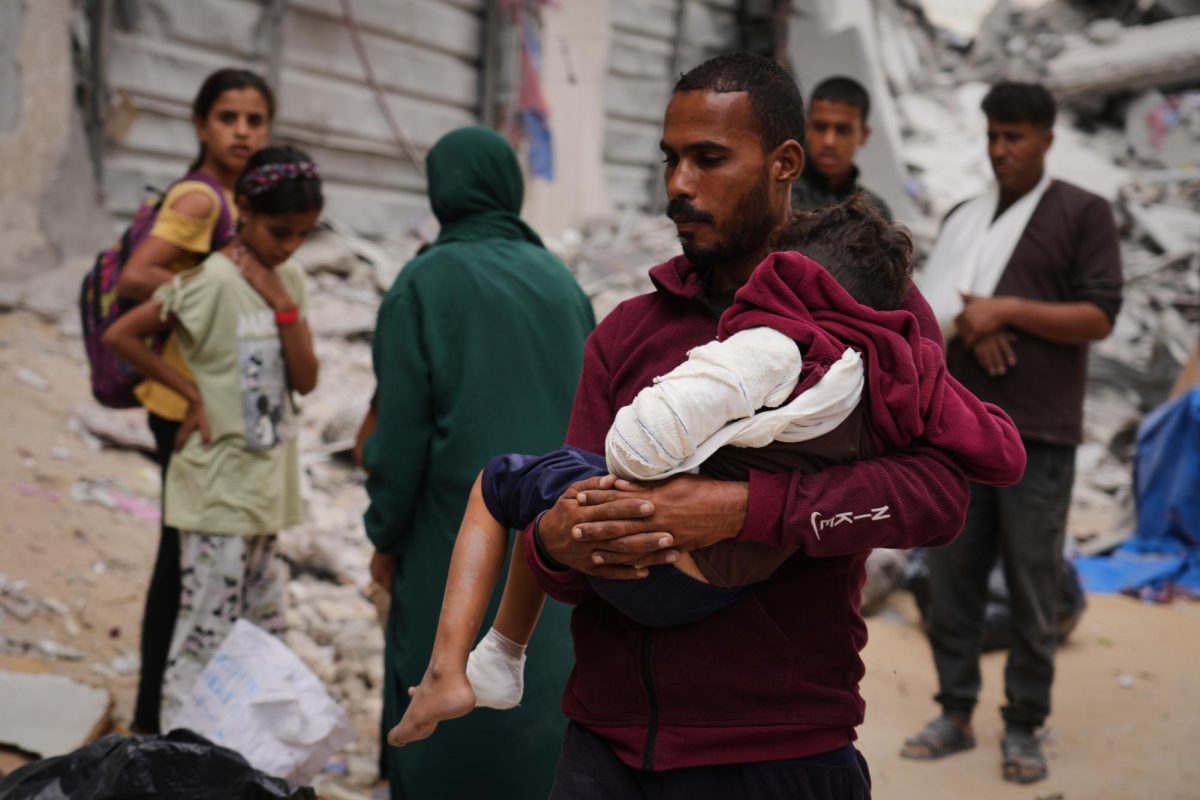
As the Israel-Hamas ceasefire reaches its fourth week, Loyola students have expressed skepticism regarding the deal, and general concern over the conflict.
The ceasefire deal, brokered by the U.S., began on Oct. 10. Hamas released all living hostages and the remains of some of the deceased hostages, and Israel freed around 250 Palestinian prisoners and more than 1,800 Palestinian detainees.
However, the ceasefire has proven to be fragile, with both sides accusing each other multiple times of breaking it. Israel has expressed concerns about the delays in the return of the remains of deceased hostages, which Hamas attributed to the difficulties of recovering the bodies from rubble.
An Israeli soldier was also killed. Israel accused Hamas of the killing, but Hamas rejected the accusation.
As retaliation to this killing, Israel killed more than 100 Palestinians, including dozens of civilians, according to Gaza health authorities.
One of the conditions of the ceasefire was an end to hostilities in Gaza by both sides.
Zahra Zaini, a senior majoring in public health, expressed skepticism over the ceasefire, which she sees as “one part of Israel’s larger project of erasing Palestinians from their homeland.”
“Palestinians in Gaza are still suffering from malnutrition,” Zaini said. “I think the ceasefire is at best a band-aid but it won’t ever be able to be the thing that puts a permanent end to the genocide.”
The Integrated Food Security Phase Classification (IPC) initiative, a UN-backed group of experts and international agencies, declared famine in Gaza City and surrounding areas.
Sophomore and psychology major Zoe Randolph talked about the images coming from Gaza and how they have affected her.
“It genuinely hurts my heart, because I see a lot of people being passive about this,” Randolph said.
Sophomore and political science major Nicholas Oliver also expressed deep concern over the situation in Gaza.
“It’s extremely upsetting. Seeing children, dead children… children without parents standing over [their] dead parents. I mean, it is really, really sad.”
Oliver also talked about what he believes to be desensitization regarding the conflict.
“A lot of people here are just desensitized to that kind of violence anyway.” Oliver said. “The media has publicized it to death, and I feel like they’ve made it into a political thing rather than the tragic crisis that it actually is.”
Zaini also talked about how so many people, in her opinion, are apathetic regarding the conflict.
“People have been conditioned to believe that some people are meant to die under bombs and famine if they are born in a certain place and look a certain way,” Zaini said. “More well-intentioned people may grow apathetic because they think it’s the way of the world and that there is nothing to be done. That powerless feeling is valid and overwhelming, but I think if so many people desire change we have to turn to one another and organize to achieve that shared goal. We’re all complicit living in the imperial core and, because of that, I don’t think we have the luxury of apathy.”
The Associated Press contributed to this report