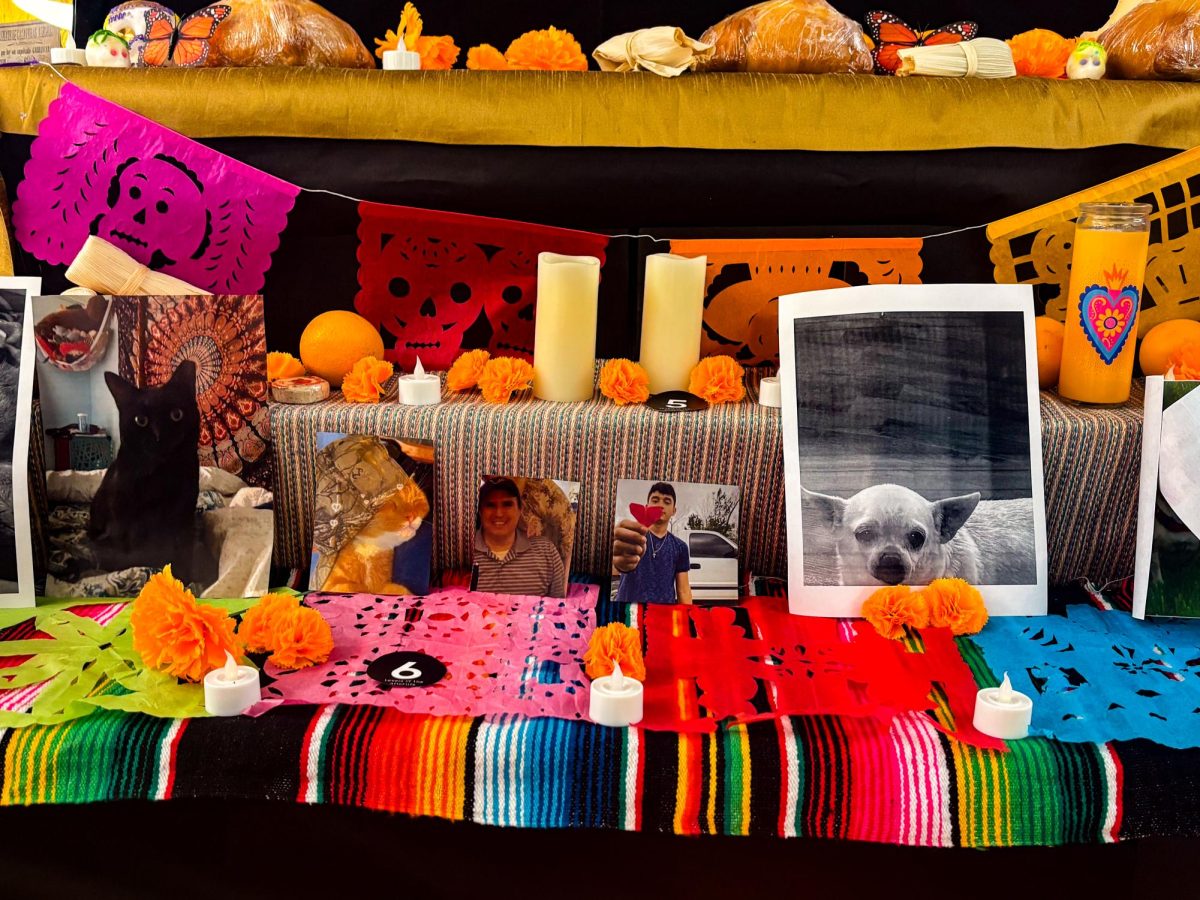
Students were met this past week with a community ofrenda near the OR where they had the chance to place photos of their own loved ones who have passed on, from family members to pets, to honor them in the afterlife.
Loyola recently provided its students with an opportunity to celebrate Dia de Los Muertos, the Day of the Dead, by constructing an ofrenda, a dedicated space like an altar reserved to honor deceased loved ones.
There was also a flyer of the seven levels of the afterlife posted on the front of the ofrenda to teach students about the seven steps of the journey to Mictlan, or heaven.
“Pre-Hispanic societies believed that there are seven steps in the journey to the afterlife, named Mictlan, where the soul finally rests,” the flyer said. “Another interpretation is the seven different places where the souls can rest depending on their death. However, the catholic conquistadors associated these seven steps with the seven capital sins.”
According to the flyer, the first step, the top of the altar, represents “heaven” and is usually where a saint is placed. The second step is saved for offerings to souls in purgatory; these offerings are used to ask for their permission to go to heaven, and candles are put on this altar to represent these pleas. Salt and water are often placed on the third step for children and the deceased as a means of purifying their soul. The fourth step is reserved for pan de muerto and calaveritas, and the fifth for the deceased’s favorite food and drink. The sixth step is often where pictures of the deceased are placed, and lastly, the seventh step consists of “a cross made of earthly gifts.”
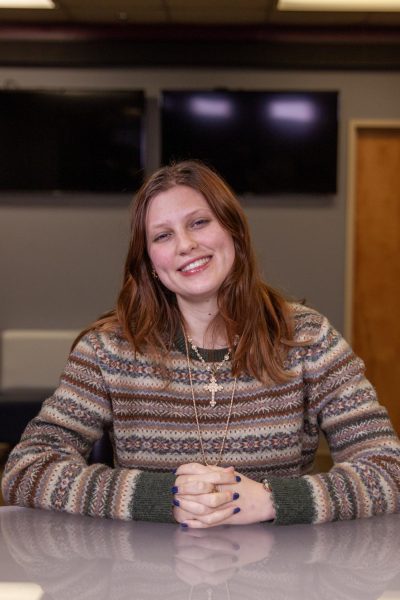
Many Hispanic students, including sophomore Valentina Russell, are away from home during Dia de Los Muertos, and as a result, they may not have access to materials needed to create ofrendas and celebrate the day.
“I usually celebrate by building an ofrenda at my house,” Russel said. “When I was younger, we would take cempasúchil flowers to the graveyard by my house, where we knew people buried there.”
Being away from family during Dia de Los Muertos is a drastic change for Russell specifically, having been raised in Watsonville, California, within a concentrated Latino community that puts on a bigger celebration. Russell took the initiative to help build the ofrenda this year as a means of keeping up the tradition, and she made sure to visit it consistently.
“I hope they keep doing this,” said Russell. “Last year, it truly helped me feel less far away from home by having a spot to remember family and loved ones who have passed and share that with others.”