I recently saw a video on TikTok by Karthik Raj, a South Asian American “comedian” saying South Asian American youth either attempt to be black or white. The video itself heavily lacked any comedic substance and seemed to be a projection of his own insecurities regarding his identity.
It is important to recognize that the argument he pushes is not one he created. The rejection of multiple identities or influences is not something new to the South Asian diaspora community nor is it even exclusive to South Asians. But, for him and those who argue a similar narrative, I must ask: What is it to be South Asian American?
Growing up I could not help but be unable to see myself in any of the characters on TV. I never saw my name or a name similar to mine used in a textbook. South Asians were either not represented or their representation would be caricatures drawn by non-South Asians, so self-degrading in nature, I would rather have none. Hence, there is no concrete culture built for the South Asian born in America, and it is being built as we speak.
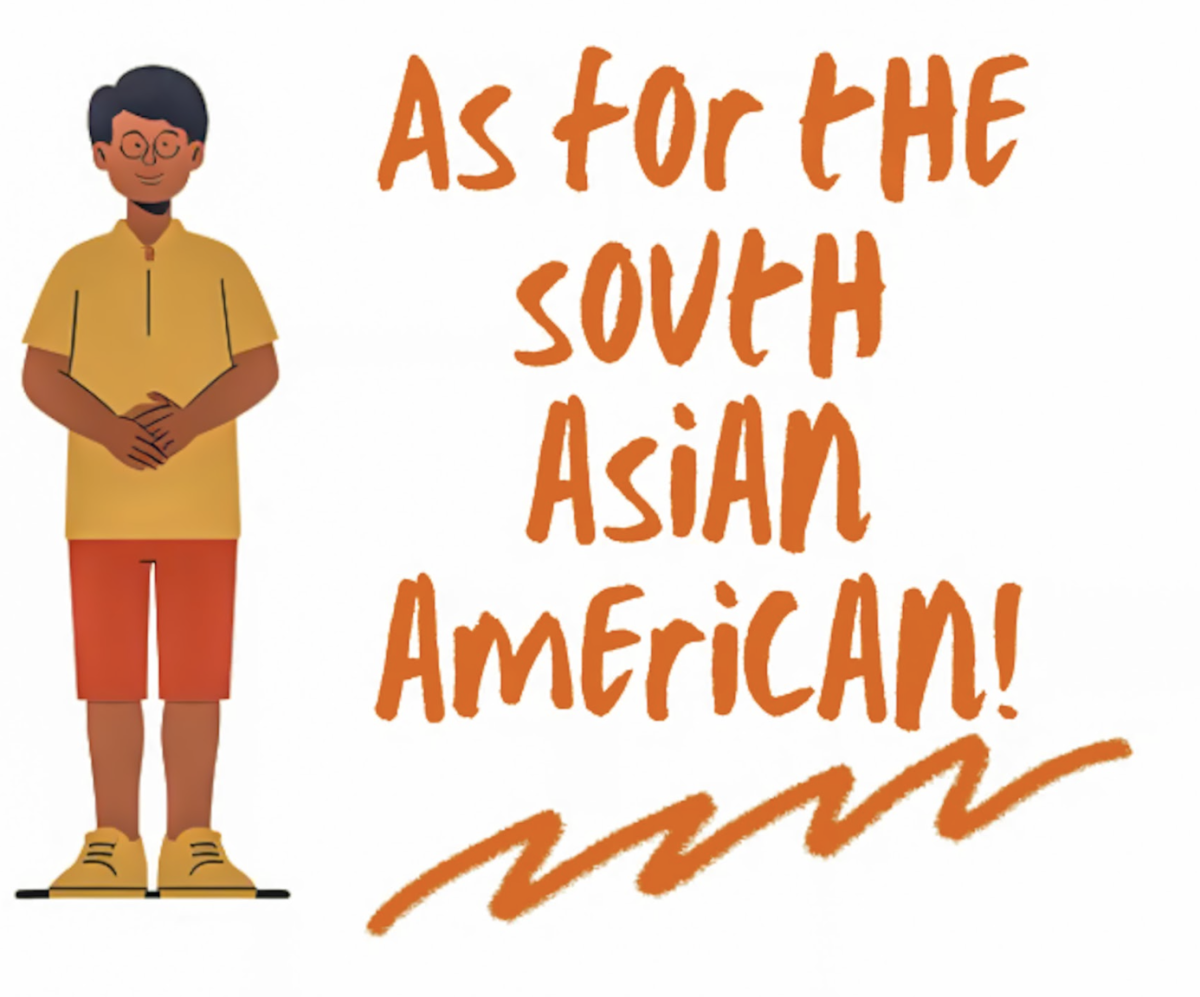
People are influenced by those we are around and the media we consume. As for South Asian Americans and their influences, they are clearly not the same as their South Asian born counterparts. Their experiences are entirely different. How can you expect their behaviors and actions to be the same? Similarly it would be understandable that South Asian American youth be more similar to those who are raised around.
For South Asian Americans, we can attempt to decompartmentalize their influences to South Asian and American — this may not be accurate as everyone’s experiences and influences vary. Being from the Bay Area, I believe the influence of South Asian culture on my life may be more than someone who grew up with less exposure to it. We cannot deny the influence of AMERICAN culture — whether it be Black or white — on South Asian Americans as after all they are South Asian AMERICAN. To deny this would be to deny them half of their existence.
It is important to note that influence can be faked and should not be a one-sided relationship. Far too many times I have seen young South Asians, especially young South Asian males mimicking Black culture and using the n-word while simultaneously basing their entire personas off Black celebrities and artists. This is not acceptable behavior. If one is influenced by another or their culture, they must show solidarity and respect to the influencers struggles — this is something that should be practiced regardless. Instead of denying entire parts of their identity, an advocacy for the representation of their roots as well as their own personal influences would be far more beneficial for forming a true South Asian American identity. This would help prevent an attempt to entirely assimilate, while simultaneously creating a new identity.
To the comedian, I hope you spend some time reassessing your relationship with your personal identity as it seems you attempt to project your personal insecurities onto others due to your skewed perspective of what you think South Asian diaspora culture should be.