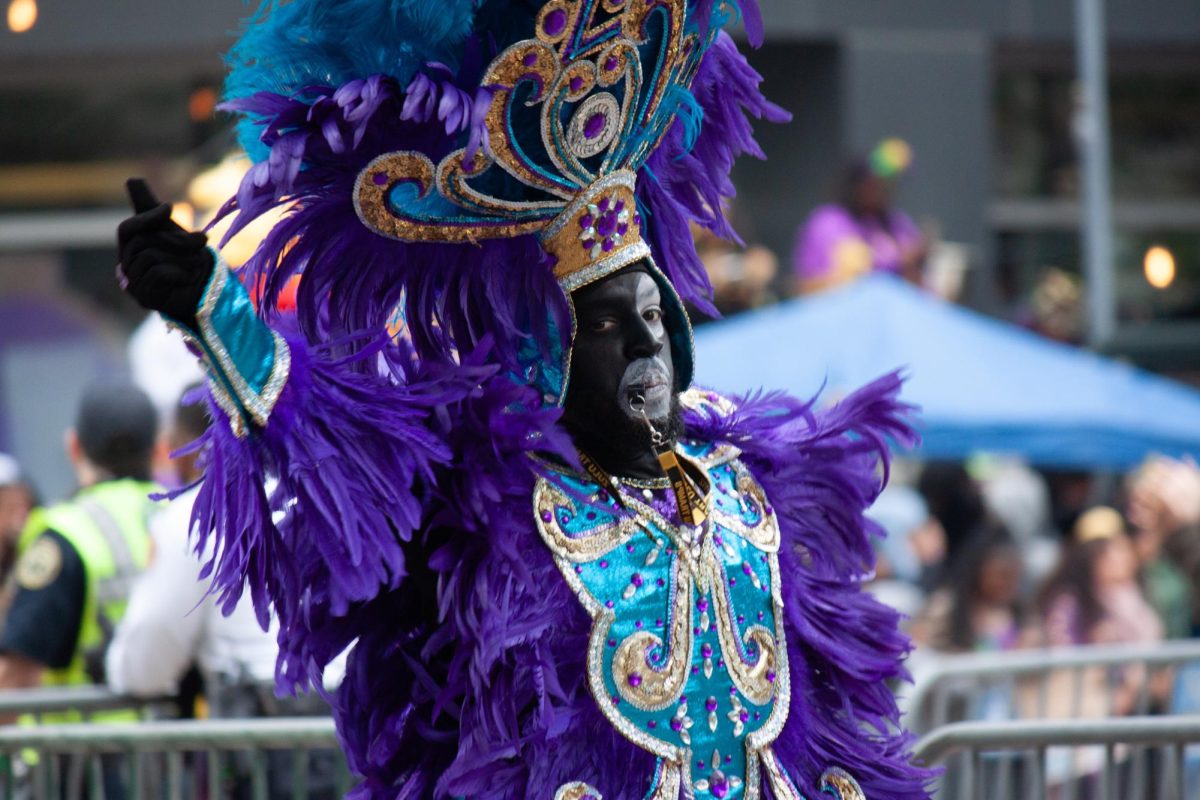
Before parading through the streets of New Orleans, Zulu was one of the many Black Social Aid and Pleasure Clubs. According to Zulu’s website, The Krewe, founded in the late 19th century, provided social and financial support to its members. In 1909, the founders officially took on the name Zulu, which was inspired by the vaudeville skit titled “There Never Was and Never Will Be a King Like Me.”
According to a synopsis on 100 years of Zulu by Charles Chamberlain Ph.D., the skit featured black and white performers adorned in highly exaggerated and stereotypical clothing including grass skirts, wigs made of Spanish moss, and blackface, which reflected the caricature of Black people within white entertainment. Instead of damning these portrayals, Zulu and its founders used it to their advantage, making a mockery of the white perception of Black identity and highlighting the elitist nature of segregated Mardi Gras.
In 1910, Zulu’s parade marked the birth of one of the most iconic Mardi Gras throws: the Zulu Coconut. Originally used as an inexpensive alternative to beads and other throws, the coconut became a staple of Zulu. Over the years, these coconuts evolved into shaven, decorated throws until a brief interruption in 1987 when a lawsuit was filed against the krewe due to injuries from the coconuts. In 1988, “The Coconut Bill” (SB188) was created to protect Zulu from being liable for any injury and was added as a “non-missile” item, however, these items have become handed from the float, rather than thrown, to avoid any further complications.
The parade and krewe as a whole was not allowed to parade on Canal Street until 1969, 60 years after its first parade on S Claiborne and Jackson Avenues. The parade consists of many characters including the King, the Big Shot, the Witch Doctor, the Governor, the Ambassador, the Mayor, the Province Prince, and Mr. Big Stuff. Each role holding a different meaning, these characters are used to satirize white Mardi Gras while also celebrating Black heritage.
Today, Zulu has upheld its original mission of supporting the community and is currently celebrating 117 years of service and parading. Zulu has gone down in Mardi Gras history as one of the most historically significant and well loved krewes.