

Before the beads start flying and the bass of the brass bands shakes the streets, a different kind of magic takes over New Orleans—one powered by bold costumes, fearless leadership, and Black women rewriting Mardi Gras history. Enter the Mystic Krewe of Femme Fatale.
The Mystic Krewe of Femme Fatale is the first mystic krewe in New Orleans founded by Black women. Created in 2013, the krewe was designed to give Black women a Black woman led organization in the Mardi Gras krewe system to expand opportunities for women to participate in carnival leadership and cultural production.
“I brought my daughter out here specifically to see them; I want her to grow up seeing women of color celebrated like this,” said Gomez, a parade goer.
A mystic krewe is a private social organization that plans and produces Mardi Gras traditions, including parades, balls, costumes, and yearly themes. The term “mystic” comes from the earliest krewes, which were once secretive and exclusive, using masks and coded rituals to create an air of mystery around Carnival. Historically, many mystic krewes were dominated by wealthy white men, limiting access to leadership and participation. Today, mystic krewes remain powerful cultural institutions in New Orleans, shaping how Mardi Gras is experienced and who gets visibility within it, making the rise of inclusive, community centered krewes especially significant.
“There was a time when spaces like this weren’t built for us,” said parade attendee Alicia Brown. “Seeing a Black women’s mystic krewe out here leading their own parade that’s powerful.”
“Knowing they were the first Black women’s mystic krewe makes this so much more special. They didn’t just join a tradition, they made history.”
Mardi Gras krewes have served as social organizations that reflect broader power structures in New Orleans. For much of the city’s history, participation in many mystic krewes was restricted by race and gender. The Mystic Krewe of Femme Fatale was historically momentous as it created space for Black women to organize, lead, and participate in Mardi Gras on their own terms.
“It’s different when you see women who look like you in charge,” said New Orleans native Danielle Carter. “It makes you feel like you belong here too.”
Femme Fatale was founded by Gwendolyn V. Rainey, who grew up with close connections to Mardi Gras through her father’s involvement in the Zulu Social Aid & Pleasure Club. Since familiar with the traditions and structures of the season, Rainey could see a lack of representation for Black women in leadership roles within mystic krewes. At the time of Femme Fatale’s founding, there were African American krewes or women-only krewes, but there were none established and led by Black women.
Marissa Richardon a native to New Orleans who never misses a Femme parade said “ It’s empowering to see Black women celebrated so loudly and proudly.”
The krewe held its first meeting in 2013 during Black History Month. After completing the city approval process and securing a parade position, Femme Fatale had their first official parade in 2015. Its creation marked a structural change within the Mardi Gras world by introducing a new type of organization centered around Black women’s leadership.
“I remember when they first started,” said longtime parade-goer Tyrone Lewis. “To see how much they’ve grown it shows how much the city needed something like this.”
According to the krewe’s mission, Femme Fatale was established to provide women of all backgrounds opportunities to participate in Mardi Gras while also engaging in community service and cultural preservation. The organization emphasizes leadership development, community involvement, and collaboration among its members.
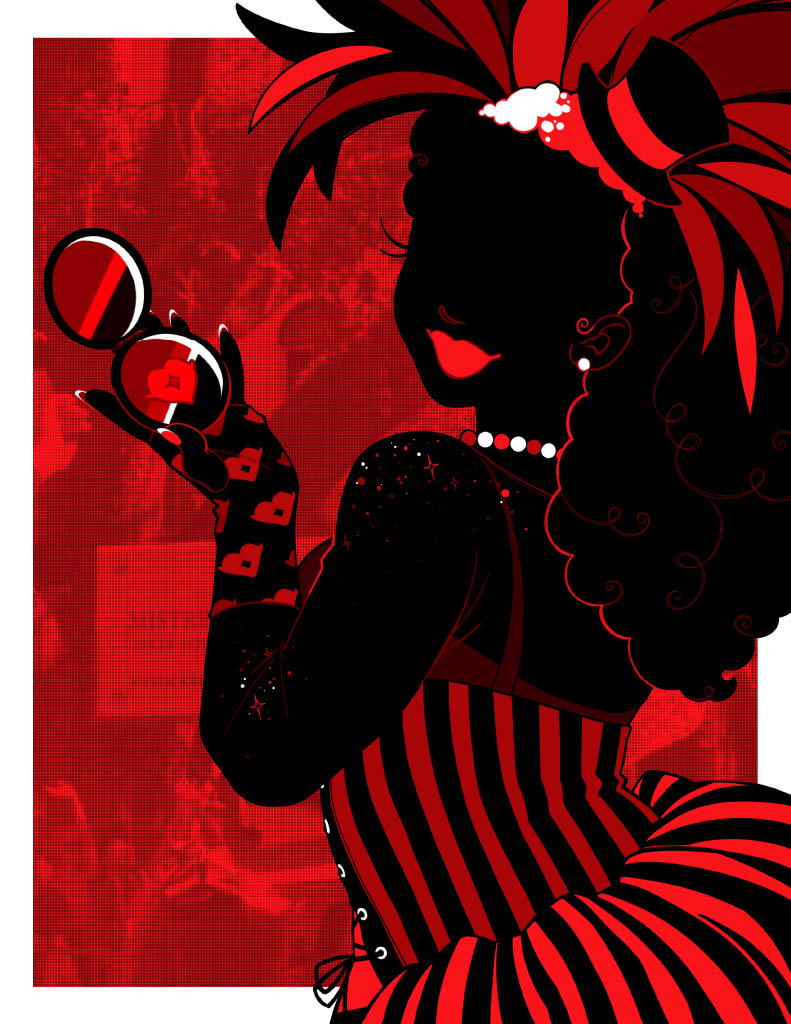
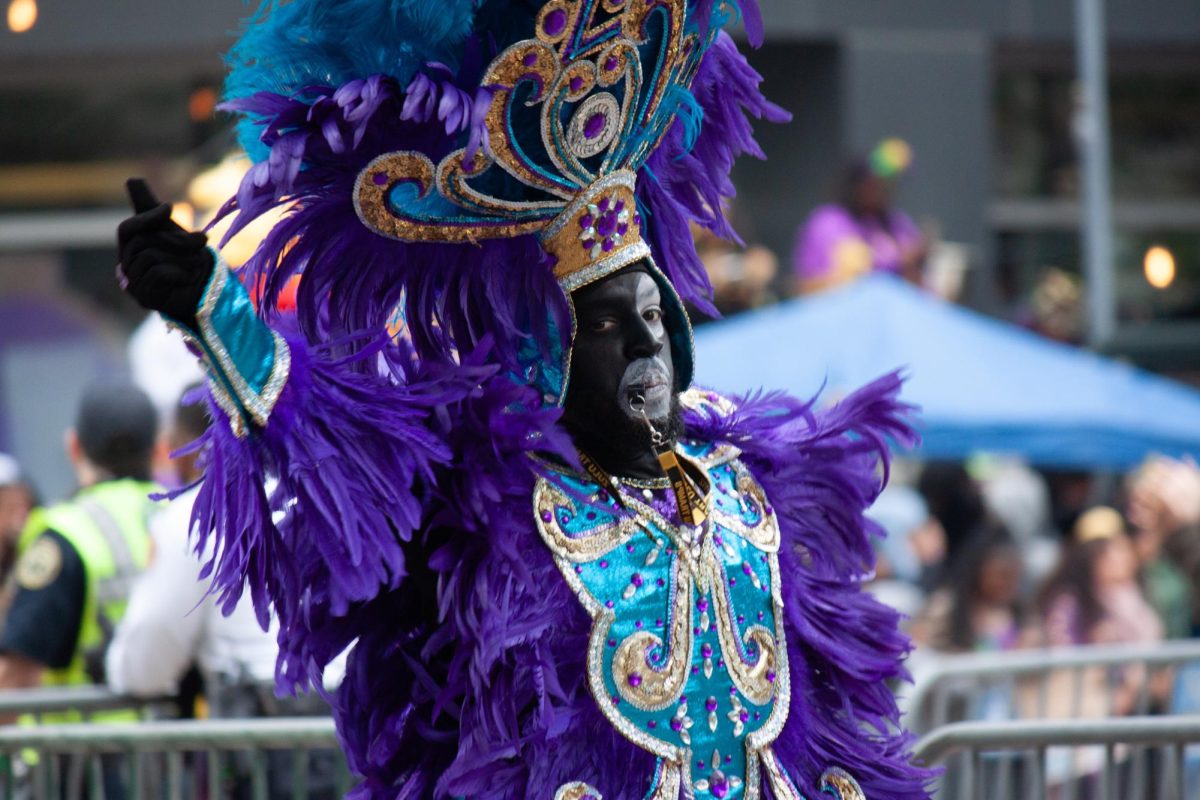
Femme Fatale distinguishes itself through its visual identity and traditions. The krewe’s official colors are candy apple red, black, and white; their signature throw is a mirrored compact, which represents reflection and self-awareness. The parade also features Cherchez La Femme, an all-female dance group that performs choreographed routines alongside the floats.
“Every year I try to catch one of their cups, dolls, and of course the compact mirror,” another parade goer said.
The visual and performance elements of Femme Fatale contribute to how the krewe presents its identity. The mirrored compact, which serves as the krewe’s signature throw, emphasizes themes of reflection and self-representation. In addition, Cherchez La Femme highlights the importance of dance and coordinated movement within the parade. As an all-female group, the dancers reinforce the krewe’s focus on women’s visibility and collective participation during Mardi Gras.
“My little girl was watching the dancers the whole time,” Gomez said. “She told me she wants to be up there one day.”
In addition to Mardi Gras, Femme Fatale operates all year round in community programs. This includes Say Yes to the Prom Dress, which provides prom attire to high school students, and youth mentorship programs such as Future Femmes and Le Jeune Femmes, which serve girls and young women through educational and leadership programming. The krewe has also partnered with community organizations to promote literacy and youth engagement during carnival season.
The creation of Femme Fatale reflects broader historical barriers within Mardi Gras. For much of the history, many mystic krewes restricted membership based on race and gender, limiting access to leadership roles. While changes to these policies have occurred over time, disparities in representation have remained. Femme Fatale was created in response to those gaps, offering a structure where Black women could serve as organizers, leaders, and even decision makers.
Since its founding, the krewe has expanded its membership beyond New Orleans, with members from multiple states and many professional backgrounds. Its continued presence has added to perspectives represented in Mardi Gras and contributed.
The Mystic Krewe of Femme Fatale remains part of the evolving Mardi Gras world with 38 floats, representing a shift in who creates, leads, and defines carnival organizations in New Orleans. As of 2026, the krewe has 2,026 members across 26 states.
“This is what progress looks like,” Carter said. “Tradition, but with room for all of us.”





Teshesha McBride • Feb 25, 2026 at 6:57 am
I absolutely love it, I have been a member now 2yrs and I plan for many more to come. Women of many ages I feel so loved, so vibrant and I have developed an outside family/ sister hood larger than life. I believe God led me to one of the best inspirational Organizations / group of Professional black women that any woman could ever ask for. Made me whole again! At the age of 52 I’m sure those my age understand when I say that lol. MKFF for life- Krewe of Femme Noir and Cherchez La Femme.
Jan Anderson • Feb 24, 2026 at 11:42 pm
It’s fabulous seeing strong and fabulous women of color.
Thank you for the opportunity to see them. Jan Anderson
J Dixey Faciane • Feb 24, 2026 at 8:12 pm
Look at us! You got our Cherchez costume RIGHT! Thanks, Kate