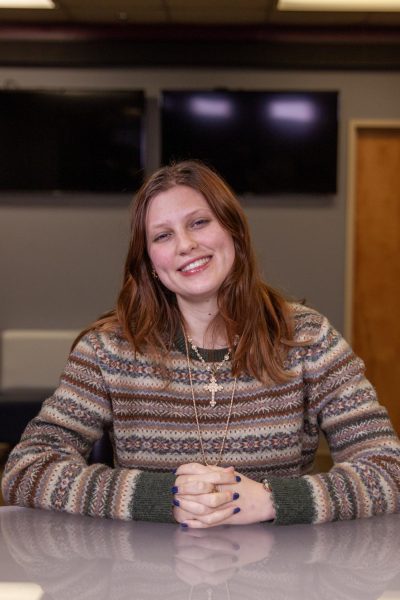
“[It’s] just adding to the greatness of what Loyola is”—this is how Monica Curtis, director of TRIO Student Support Services, described the TRIO program on campus.
Curtis believes that Loyola’s TRIO academic program does much more than directly aid the annual 140 students accepted into the program: it starts a conversation for the entire university.
TRIO is a network of programs nationwide that run from middle to graduate school, Curtis explained. These programs are designed to aid a variety of students, including first-generation students, low-income students, and students with disabilities.
Since Curtis joined Loyola’s TRIO staff in 2022, the program has increased their staffing to having two full-time advisors, providing more coverage in need. Because the program is becoming more established and well-known, Curtis stated that the team is moving towards focusing on larger initiatives.
Large-scale events, she explained, are what the program wants more of for students, including first-gen week, national TRIO day events, and possibly leadership conferences.
Because of this, the program planned multiple events this week for National Trio Day on Saturday, including an information session, “Wellness Wednesday,” and “First-Gen Friday.”
Additionally, the organization was able to bring students to a Pelicans game last Saturday.
“It really was just for our students to talk with professionals in the field, marketing, communications,” Curtis said.
Although Loyola’s TRIO program does not take center stage for academic advising and success coaching, it acts as an additional source of hands-on support for students who may require additional help.
“I mean, every week, I at least have someone that says, oh, I’m so thankful to come to you guys to just grab supplies or to talk or get a recommendation letter or navigate a grad school application,” Curtis said.
With the second grant cycle in full swing, the university has seen an increase in the first-generation student population, according to Curtis.
“So 30% of our students here at Loyola are first gen and our incoming class from last fall, 39% of those students, are first generation,” she said.
Because of the growing population of first-generation students, Curtis explained, TRIO has switched gears from assisting only so many students to opening the conversation and demonstrating how to increase student success and graduation.
“I’m proud of the work that we’ve done. I’m proud of my team. I’m proud of our students,” Curtis said.
Miriam Afran, a senior double majoring in Business Analytics and Business Management, is a first generation college student that joined TRIO when she was struggling to find her place in college.
“I did not just need academic help. I needed guidance, reassurance, and a community that understood what it felt like to navigate higher education for the first time,” she said.
Through TRIO, Afran was able to manage her FAFSA, budgeting, academics, and other college responsibilities with the help of her advisors.
At the end of her junior year, Afran was offered the opportunity to return to TRIO as a peer mentor for students in situations similar to hers.
“Stepping into that role felt like coming full circle,” Afran said. “TRIO did more than help me succeed academically. It gave me confidence, belonging, and the purpose to give back and uplift others on their journey.”