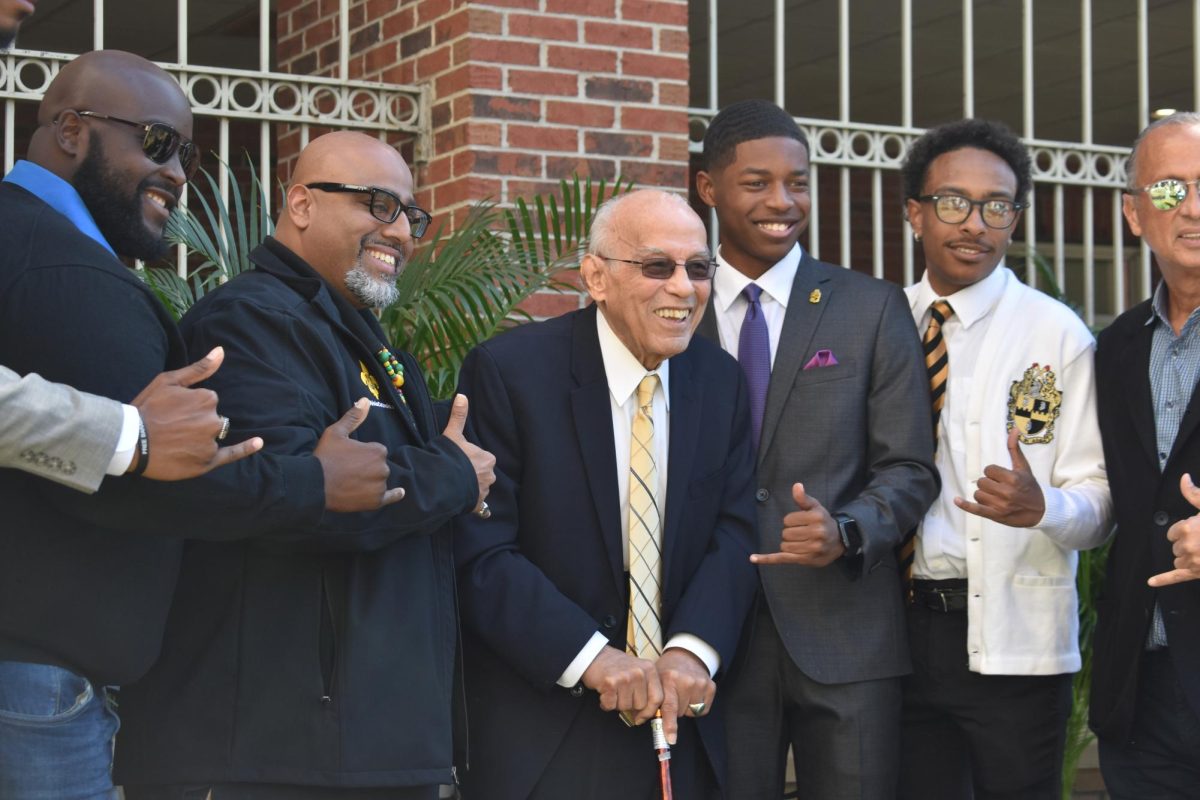
As the first black man to graduate from Loyola’s College of Law, the late Norman C. Francis played a prominent role in the academic community for New Orleans. His relationship with Loyola University and trailblazing efforts for civil rights have made a lasting impact on and off campus.
Francis passed away on Feb. 24 at 94 years old. He was the former President of Xavier University, an attorney fighting for civil rights, had at least eight honorary degrees, a Presidential Medal of Freedom holder, and a friend to many.
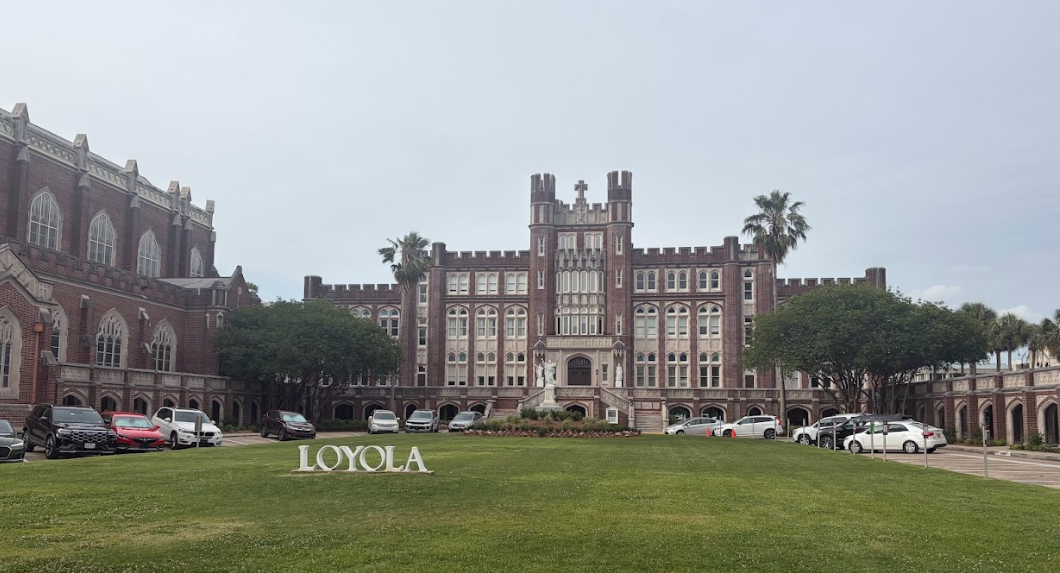
Francis’ advocacy work and character echo through the halls of Loyola University, inspiring the current generation of students and faculty alike. His substantial legacy emphasizes the importance of diversity, equity, and inclusion in the world of academia and beyond, according to former Loyola President Justin Daffron.
In 1955 amidst the budding Civil Rights movement in the deep south, Dr. Francis earned his J.D. from the College of Law, a break in the glass ceiling for Black academics that set the tone for Loyola’s future.
Much of Loyola’s faculty, including Jay Davis, the Associate Director for Residential Life, recall the ways in which Dr. Francis paved the way for inclusion at Loyola. “…Dr. Norman C. Francis opened doors that made it possible for many of us–including me, as a Black woman–to learn, work, and belong at Loyola,” she said. She continued to explain how Dr. Francis exemplified what it means to be a Loyola student, how he “…lived a life rooted in faith, devoted to family, and driven by service,” Davis said. As a symbol of Dr. Francis’ leadership and service, Loyola awarded him an honorary Doctorate of Humane Letters in 1982.
Bringing his passion for equality to the national stage, Dr. Francis served in the Army and then worked in the U.S. Attorney General’s Office where he helped to integrate federal agencies.
As a lawyer in the 1960s, he represented a civil rights case that made it all the way to the Supreme Court–defending students affiliated with the Core of Racial Equality who staged a sit-in at a segregated New Orleans lunch counter and were arrested for it. The result was a win, setting a legal precedent against segregation in the South.
“Dr. Francis’s bravery and commitment to equality inspired many law students – myself included – to use the law as a tool for advancing justice and serving our neighbors,” said Dean of Loyola’s College of Law, Madeline Landrieu.
As an administrator at Xavier University, Francis provided shelter for the Freedom Riders at Xavier after they had been attacked following a bus boycott in 1961.
He served as President of Xavier for 47 years–from 1968 until 2015, doubling enrollment and increasing opportunities for Black STEM and medical students.
His efforts in the academic community led to the inspiration of many, according to a statement made by Loyola University’s President Xavier Cole. “[He] was a hero to me personally,” Cole said.
Francis’s life’s work also continues to inspire the students at Loyola, including the members of the Black Student Union on campus.
“Francis dedicated his life to education, leadership, and the advancement of black excellence. His unwavering commitment to empowering students continues to inspire us,” said BSU President Paris Hayes. According to Hayes, Francis’s legacy was pivotal for generations of black students across the country.
“We are committed to honoring his contributions by continuing the work of uplifting one another, striving for academic excellence, and advocating for equity and opportunity. Dr. Francis’ impact will not be forgotten,” Hayes said.
When Katrina hit in 2005, Francis laid the groundwork to rebuild Xavier and took initiative to help restore the New Orleans community as a whole. As the head of the Louisiana Recovery Authority, he oversaw the multi-billion dollar rebuilding project. Former New Orleans Mayor Mitch Landrieu was quoted in saying that “in his toughest moments,” it was Francis who he turned to for support. A year after the devastation hit, former U.S. President George W. Bush awarded Francis with the Presidential Medal of Freedom for his role in the restoration and his civil rights activism.
“His work reflected his belief that New Orleans was a home for all of us,” Cole said.
Returning to Loyola in 2015, he was the recipient of the St. Ives Award–the most prestigious acknowledgement a person can get from the Loyola Law Alumni Association, solidifying his decades long relationship with the university.
“His presence carried a quiet strength and conviction that left a lasting impression on me. That strength was rooted in faith, discipline, and a deep commitment to expanding opportunity for others,” President Cole said when asked about his personal relationship with Dr. Francis.
In 2022, Loyola renamed their Carrollton Residence Hall to the Blanche and Norman C. Francis Family Hall after Francis and his wife in order to signify Loyola’s values of inclusion and equity, values that the Francis family channeled through their actions.
“His legacy fills our school and touches every student who walks our halls,” Landrieu said
Eloise Pickering and the Associated Press contributed to this report.