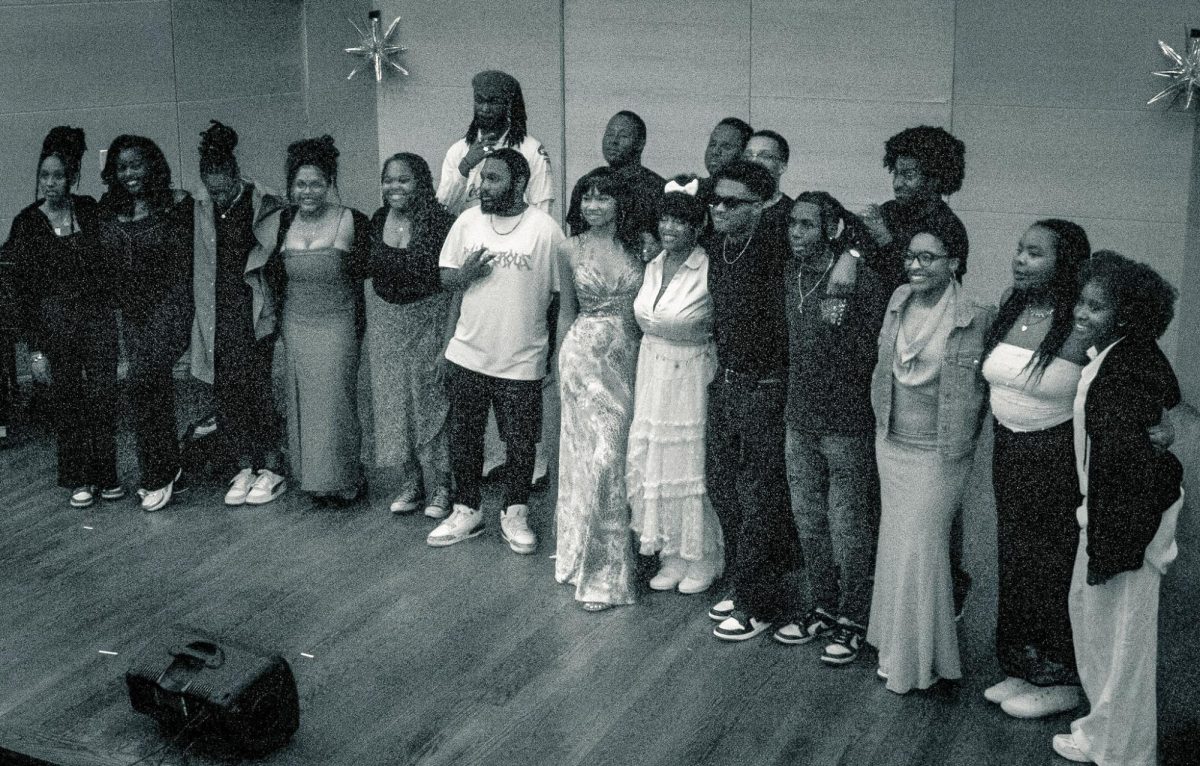
“We decided to implement real original stories and poems, and also our favorite classics like […] Within this approach, we got to build community and uplift them in a way where they could celebrate being Black in a space and not necessarily only the struggle that brought us here, but the joy, artistry, humor, vulnerability, and brilliance that define us today,” Stanfield said.
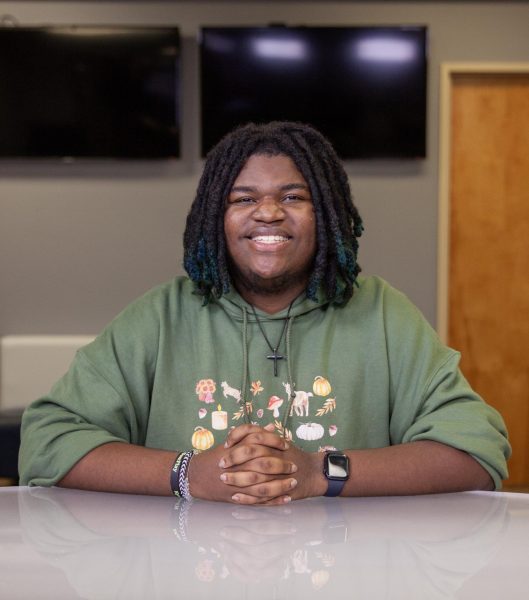
Theatre arts and physics liberal arts junior Gabrielle Stanfield is one of the founders of Theater for the Culture and serves as the current president. Initially the event was going to be a historical catalog of speeches and pieces from the Civil Rights Movement. However, considering the current political climate, the executive board decided they wanted to do something that students needed to see now, and that is based on current events.
Stanfield believes that the showcase was beautiful because of all of the talent and work that went into it.
“There were so many Black hands uplifting, promoting, and organizing this project that I couldn’t help but be proud of Theater For the Culture producing this showcase and of Taylor Griffin being the director and executing the vision effortlessly,” she said.
Under the direction of musical theater junior Taylor Griffin, she challenged the artists to answer: ‘what does Black storytelling look like to you?’
“Overall, I am extremely proud of the showcase. The creatives who performed were so patient and understanding during this whole process and I couldn’t have wished for better artists to represent Black voices on campus,” she said.
As a Black musical theater major, she firmly believes that the arts are a major part of the expression and recognition of Black history. She also believes that it is imperative, now more than ever, to promote and support work by Black creatives.
“The Loyola community is rich in diversity and culture and each and every single student deserves to feel and be represented. Showcases and events such as last night’s do a great job at celebrating and appreciating the students that make Loyola, Loyola,” Griffin said.
As for the future of the Black History Month showcase, Theater for the Culture will continue their annual tradition of hosting this event, and they hope to do so for many more years to come. Griffin encourages students from all over campus to reach out to TFC with any artistic ideas that they may have.
One of the performers, senior theater major Nala Aolani Scaife, recited a monologue from the play For Colored Girls Who Considered Suicide by Ntozake Shange.
“I was proud of my performance because it gave me a chance to revisit something I had done in one of my first shows at Loyola. But more importantly, the attentiveness and energy that I, and all the other performers, received from the audience was incredibly heartwarming,” Scaife said.
One of her standout moments in the performance was when she had to give another Black woman a rose, and after the show she came to Scaife with love and gratitude.
“I really hope I made her day because she made mine,” said Scaife.
Scaife believes that the showcase, along with other cultural events, is very important to the Loyola communitybecause it is an opportunity for students from different backgrounds to connect, and it opens the door for students to empathize with one another.
As a graduating senior, the showcase left her with high hopes for the future generation of scholars here at Loyola.
“I want everyone who attends Loyola to have such a beautiful, diverse experience filled with communal love and kindness. I love my school and the students in it,” Scaife said.
Hip-Hop and R&B sophomore Jayden Nelson, whose artist name is JAYSINGS, shares a lot of similar sentiments regarding the showcase and his performance, which was Take me to your River by Leon Bridges.
“I felt great about my performance. I am really proud of myself and it is the first time I’ve really felt comfortable on stage. I have been getting many compliments on my performance and I am starting to realize how much emotion I can make people feel with my voice,” Nelson said.
For Nelson, the showcase is central to celebrating Black history because it gives students an opportunity to honor their ancestors by carrying on their legacies and acknowledging the hardships they faced for the sake of helping our generation.
As it pertains to the Loyola community, he finds the showcase valuable because it creates a space where, for certain, Black people will not be shut out.
“I feel the showcase is important to the Loyola community because we as Black people are often shut out of white spaces, especially in theater. So having this space to represent ourselves is very important,” Nelson said.
The audience also feels similarly about the performance as the people who were a part of it.
Ava Buckley-Wilson, a senior theater arts major, greatly enjoyed the performance, saying, “I appreciated the different artistic styles that were presented throughout it as the audience was able to experience the range of Black creativity through their interactions with gospel, monologues, rap, and original pieces.”
Buckley-Wilson also found the performances to be interesting from both the presentation of work by Black creatives and artists and also the fact that Loyola students were invited to express how they feel about their Blackness.
“Throughout the showcase, the audience was reminded that history is not a static distant mode but active in our present—that there’s a certain interaction taking place whether we are aware of it or not, where we are informed by history and also, in some way, history is informed by us,” said Buckley-Wilson.
For her, the showcase conveys that Black people are not a monolith but are instead very diverse, with a variety of forms of expression that come from an array of experiences. It also contextualizes what Black joy looks like by acting in conversation with the audience.
Buckly-Wilson is also really excited about the future of the showcase, and she’s even more excited about what the future of the event holds for the artists that participate in it.
“I am excited that the showcase will take place in the future, as it allows for Black creatives to celebrate the achievements of Black artists and it makes more space for Black students to share their projects, songs, and poetry. It’s a wonderful reminder of community on campus and I’m glad Theatre For The Culture will continue on with the event,” Buckley-Wilson said.