The no-kill philosophy—a belief that a community should save every healthy or treatable animal rather than resorting to euthanasia—has shaped the state of shelters around the country, which face consistent overcrowding. This is exactly why I think it’s important to re-evaluate animal euthanasia and open up a necessary discussion of what we as a community can do to reach a morally palatable conclusion.
I talked with Jeff Dorson, Director and Founder of the Louisiana Humane Society, about the budget cuts that affected our state’s Society for the Prevention of Cruelty to Animals; these were implemented after New Orleans faced a $220 million deficit. He told me what that could mean for the New Orleans community; the budget cuts have led to owners dumping their pets on the streets at an alarming rate, which, if ignored for a long period of time, can spark a wildfire within the city.
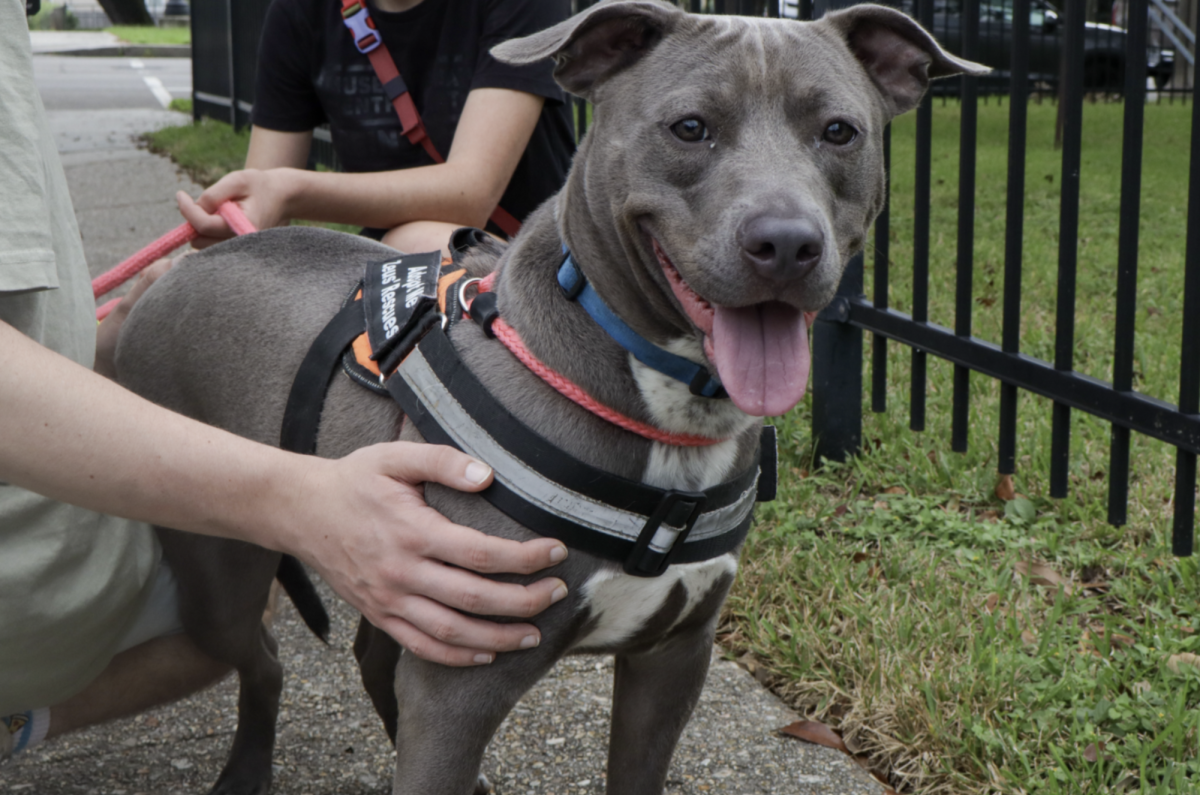
This wildfire, he explained, will come from dogs forming packs after being left on the streets for some time, and with neutering and spaying prices going up, population control becomes all the more difficult. These packs can lead to consistent dog attacks and further disruption in the city as well.
Talking to Dorson made me realize something: people consistently criticize euthanasia in shelters, but at the same time, there is little to no support that promotes the alternative.
The philosophy of keeping a 90% no-kill rate in shelters, as Dorson explained, may seem to be the most ethical outcome, but there is so much more at play behind these kennels. How many dogs are stuck in painful situations because shelters are trying to uphold this statistic? Even more so, how many dogs on the streets are denied a spot in shelters because of this?
This is an incredibly complex issue, because there can be cases where shelters are full of animals that are still adoptable and healthy, leading to a stalemate. We are seeing this even more now because of a decrease in adoption rates after Covid, as well as an increase in shelter intakes.
Even when adoption rates are high, dogs nearing the ends of their lives due to age or other components are often overlooked. Euthanasia isn’t absolutely necessary in their cases, so many times, they spend their remaining time in shelters.
So, what can we do in the situation where dogs are both filling cages and streets? The simplest answer is to adopt, of course, but this has become a bigger problem with dog breeding. People are able to choose the breeds they want, and others, of course, make much more money than shelters as a result. The system cannot be taken down simply by crying “adopt, don’t shop!” to people who make a profit off of it. This problem persists due to lack of regulation by the United States Department of Agriculture, making it easy for breeding to take over as standard.
However, this doesn’t mean that we can’t put this into practice as a community. People can take up roles as fosters, even hospice fosters, to open up more space in shelters. This is an effort we need to take up as a city, especially while we are facing budget cuts and monetary issues with rescue services. If you’re thinking about getting a new furry friend any time soon, really consider looking at nearby shelters rather than breeding farms, because, more often than not, you may even see your dream breed in one of these shelters.
I suppose what I’m trying to say is that we as a group have the power to help shelters out so that they don’t have to resort to euthanasia for animals that do not need it. We can donate and focus our efforts on clearing dumped animals from the streets.
However, if we don’t play a part in animal aid, we cannot be so quick to judge euthanization, because at the end of the day, how many more options are there for these pets? If we don’t try to beat the system, we have no right to criticize those trying to work around it.