


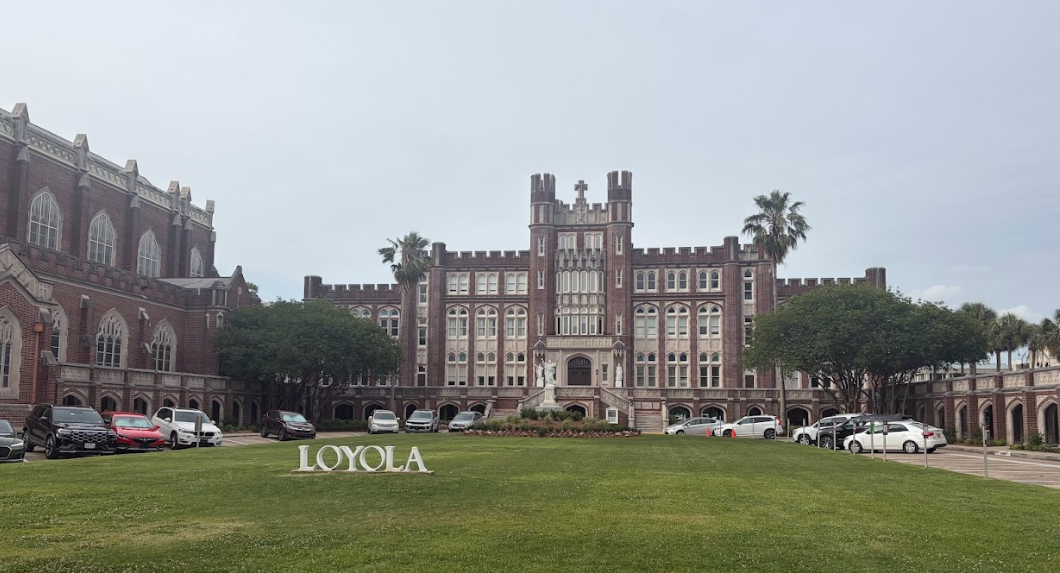
On Oct. 15, the Student Government Association at Loyola University New Orleans voted to deny Turning Point USA an official school charter. The denial will prevent them from accessing any university funds and reserving space for school meetings. For both students and non-students, this decision has caused a major debate over free speech, campus culture, and the university’s Jesuit mission.
Supporters of the decision state that it aligns with Loyola’s identity as a private Jesuit Catholic university, whose priority is inclusion. The Student Government argues that Turning Points national reputation and its stance on prominent issues like race, gender, immigration, and more, conflict with the inclusive climate that Loyola strives for. Many students, including me, believe that Turning Point does not accurately represent our school or the community we have at Loyola. Part of what makes our school and the city we live in so amazing is diversity. Letting a club operate that would threaten the wellbeing of our diverse student body would be the wrong decision to make. Our school has a duty to protect its students and ensure they feel safe and welcome. Letting a club on campus with a history of hate speech would jeopardize our overall mission as a Catholic Jesuit school.
Others worry that the decision sends the message that certain viewpoints are unwelcome at our school. The chapter stated that they wanted to “offer a space where our faith can be shared and where students are welcomed to engage in open and sometimes polarizing conversations without fear of being ‘canceled.’”
Some have stated that this denial is a limitation on student activism and a limitation of free speech. Others believe that the school is acting within the students’ best interest in making this decision. This decision was arguably one of SGAs most controversial votes with over 100 students showing up to boycott the charting. There is no reason to instate a club on campus that will cause more issues for our students than it will do good. Being able to be neutral about the decision of Turning Point joining our campus is a privilege within itself. If you aren’t offended by the hate speech that Charlie Kirk and his club has spread you are privileged enough to not be part of one of the many groups that Turning Point has spread hate speech against.
This decision has caused many arguments among students, parents, staff, and even FOX News. This decision showcases the fact that Loyola is more than willing to use its chartering process to protect marginalized students at our school in order to uphold its Jesuit mission. Students who are in favor of this decision see this as a positive step that prioritizes safety, diversity, and inclusion.
It is important to note that Turning Point isn’t the first organization that has been rejected for not aligning with the Jesuit mission – and I can assure you that it won’t be the last. The Reproductive Rights Club, which sought to provide information and discussion around reproductive rights, was also denied by the SGA multiple times for similar reasons. In this case, student senators cited conflicts with the university’s Catholic teachings about abortion and contraception.
This issue regarding TPUSA is so huge that even FOX News is commenting on it. There are several debates going on in the comment section, especially from people who don’t truly know how SGA votes work. For most students, this consistency among both left and right-leaning groups demonstrates integrity and fairness among all groups trying to achieve a whole charter. Loyola applies its mission-based standards to every club regardless of their political background or religious beliefs.
It is important to note this when talking about the school declining Turning Points charter. For other students, this idea showcases how the Jesuit ideals can limit student expression, especially when the clubs don’t directly align with Loyola’s values. Some students have expressed concerns that if school-wide recognition is based on whether the club fits Loyola’s mission, then people with unconventional perspectives may hesitate to form groups at all. As a school that promotes free speech and diversity, this is the last thing we would want.
The decision highlights the ongoing tensions between upholding community values while protecting the diversity of thought and free speech. Loyola has a responsibility to protect its students from being subjected to ideologies that threaten inclusivity and diversity. Some students argue that universities are meant to be spaces where ideas can be challenged through discussion and not exclusion. This is a tricky line to walk, especially when you consider that the presence of this club would make many students feel unwelcome or uncomfortable on campus. This includes many students who have been a part of the Loyola community before Turning Point ever wanted to be, who deserve to feel safe and supported on their own campus.
Ultimately, the Student Government’s decision to deny Turning Points charter was about maintaining the values that Loyola University represents. While open dialogue is important, open dialogue should never be at the risk of endangering a student’s sense of safety or belonging on campus. The introduction of an organization that has had a history of divisive rhetoric could potentially undermine the sense of trust and the feeling of being included by the community on campus. Through prioritizing the well-being of the community and remaining committed to its mission, Loyola made it very clear to all groups on campus that their membership would not only be in compliance with the procedural rules of the university but also in alignment with the moral and cultural expectations of the university. In the process, the university reaffirmed that diversity, compassion, and respect are always the top priorities.








Melanie • Nov 8, 2025 at 10:32 pm
Interesting – so how do you defend the LGBTQ club on campus. You talk about Loyola’s values and say you follow them, yet…In Catechism, it states “ Basing itself on Sacred Scripture, which presents homosexual acts as acts of grave depravity, tradition has always declared that ‘homosexual acts are intrinsically disordered.’ They are contrary to the natural law. They close the sexual act to the gift of life. They do not proceed from a genuine affective and sexual complementarity. Under no circumstances can they be approved.”. So SGA says no to a reproductive rights club and a TPUSA club, but approves and charters an LGBTQ club? Please explain.
So TPUSA is said to hate because if its stances and beliefs religiously and politically, but Loyola doesn’t even address their own stances on homosexuality?
Jovian • Nov 17, 2025 at 1:12 pm
Your selective omission answers your question exactly. The very next sentences in the Catechism read: “They [homosexuals] must be accepted with respect, compassion, and sensitivity. Every sign of unjust discrimination in their regard should be avoided.” CCC 2358.