Some Loyola students are advocating for collaboration with Loyola University New Orleans administration regarding immigration concerns and implementing sanctuary policies on campus, however students feel that their ongoing efforts have been largely dismissed.
On Feb. 10, students delivered a letter to University President Xavier Cole outlining their concerns and requests for sanctuary policies, to which they received a response on Feb. 27.
“It’s a scary time in the world. Without any expressed protections for students, students wanted to have a conversation with administration and so we presented a letter with some policies that we would like to see at Loyola that would make students feel safer,” said Juleea Berthelot, a Loyola sociology senior and member of Liberate and Unite New Orleans Students for a Democratic Society.
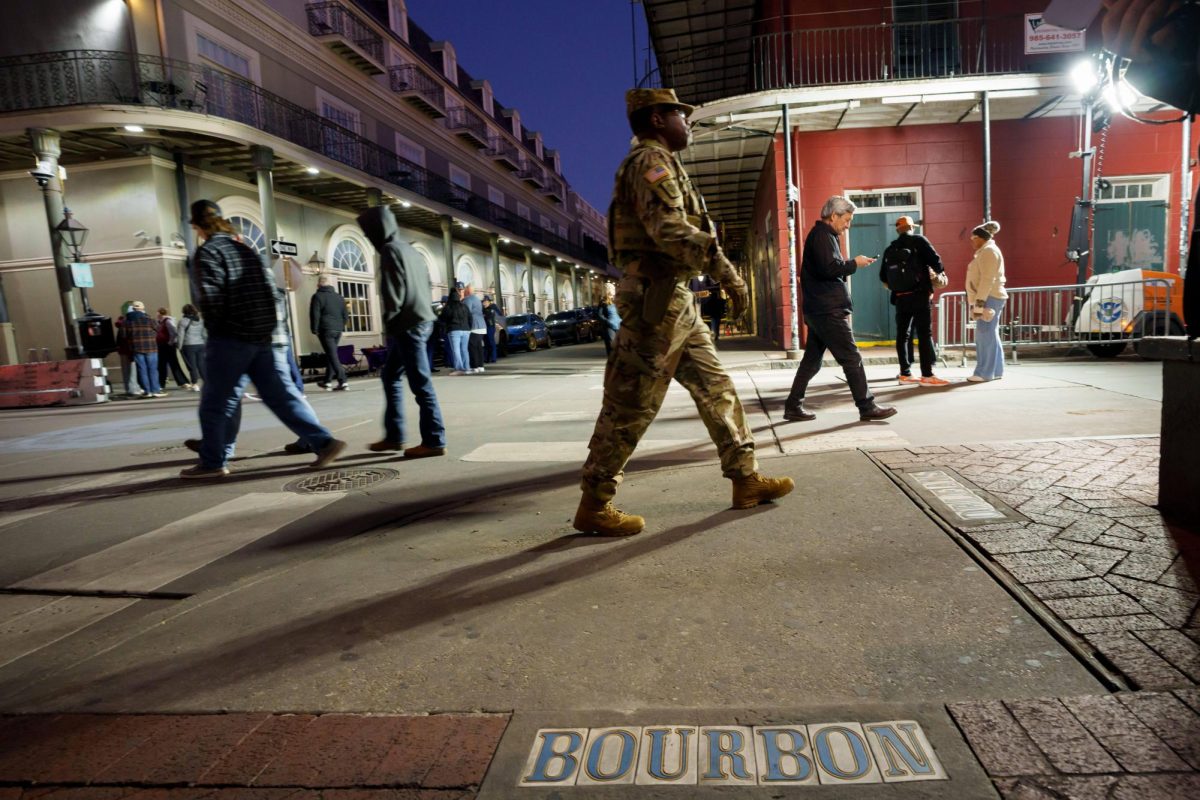
The letter had eight explicit requests including public communication as to what constitutes a private space that Immigrations and Customs Enforcement is not permitted to enter, public communication showing the university’s commitment to the safety of their immigrant students, the utilization of Loyola’s messaging system if ICE is present on campus, the public refusal of cooperation between Loyola University Police Department and ICE, and classes to be conducted in a hybrid model if the Department of Homeland Security conducts another mass immigration effort in New Orleans, similar to last December’s Operation Catahoula Crunch.
These requests are in line with sanctuary policies, rather than deeming Loyola an explicit “sanctuary campus,” the students who handed in the letter have said.
The letter additionally welcomed a conversation with the university.
“We understand the potential difficulties of implementing these policies and welcome an open dialogue between students and administration concerning our proposals,” the letter stated.
The response came on Feb. 27 from administration and Loyola’s Immigration Task Force, which was implemented in February of 2025.
“The task force…serves as a cross-campus working group that reviews university policies, coordinates campus guidance, and helps ensure that students, faculty, and staff have clear information and access to appropriate resources,” said Director of Communications Julia LeBlanc.
According to the university response, the task force includes representatives from Student Affairs, Mission and Identity, Academic Affairs, LUPD, Marketing and Communications, General Counsel and the Office of the President.
It remains unclear who specifically serves on the task force and who students and faculty can contact with concerns. LeBlanc did not respond to this question in time for publication, although she said that students should address immediate concerns to LUPD.
“For broader support, guidance, or questions, students can access a range of campus resources, including the University Counseling Center, Student Life and Ministry, and their dean’s office. These offices provide confidential support, pastoral care, and academic guidance,” LeBlanc said.
The email was divided into five sections which covered campus safety protocol, current campus status, support and resources, policies and ongoing review, and continued engagement.
“The Loyola Immigration Task Force remains attentive to campus climate and student concerns,” the email stated.
The task force says that they haven’t yet had any interaction with immigration enforcement on campus.
According to the response, “the university continues reviewing policies and procedures to promote clarity and consistency, including: … identification of non-public spaces.”
Students had requested that the university publicly identifies private spaces, but has yet to receive direct follow-up on that concern.
“We are committed to ongoing dialogue and to supporting a community grounded in respect, compassion, and belonging,” the Immigration Task Force said.
According to LeBlanc, “Loyola must operate within applicable federal, state, and local laws while remaining guided by its Jesuit mission and commitment to the dignity, safety, and wellbeing of all members of the university community.”
She added that the Immigration Task Force meets regularly to review policies, coordinate communication, and ensure that the campus has access to clear guidance and resources.
“Now that we know this immigration task force exists but is seemingly doing nothing, we’re advocating for student and faculty representation on the task force because it’s just staff/administrators,” Berthelot said.
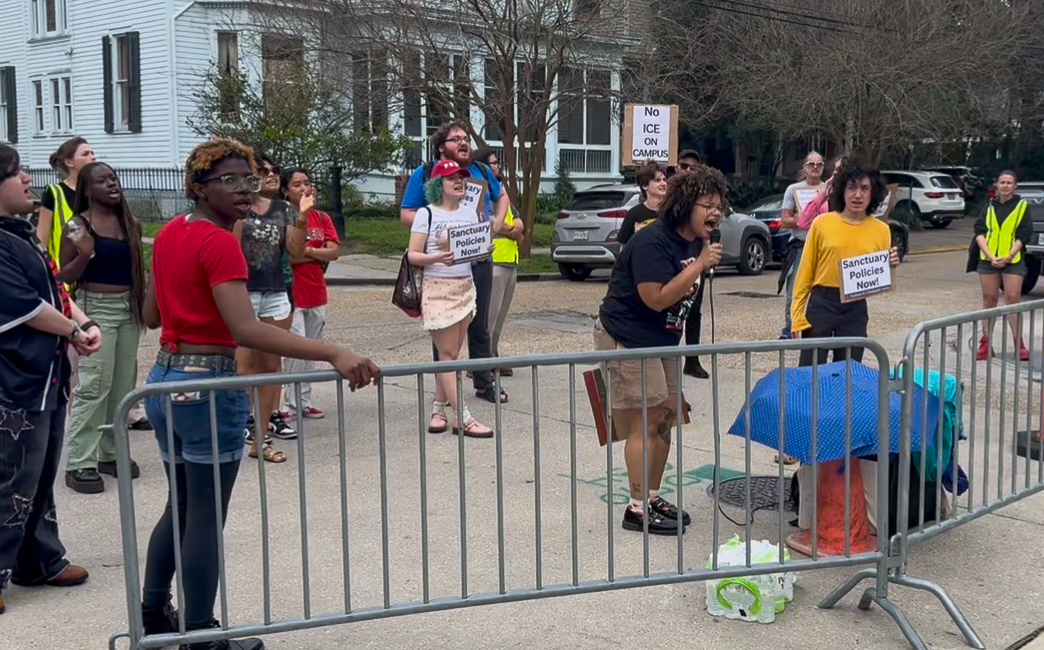
On March 6, students, community members, and faculty protested on Calhoun Street to ask for more support and clarification from university administration.
“Students were really angry with the response that we got from Dr. Cole and the Loyola University New Orleans administration,” Berthelot said.
A few members of Loyola’s American Association of University Professors chapter were also present at the protest in support of the students and their academic freedom. The members said that academic freedom includes freedom of thought, speech, and expression.
“Although individual AAUP members, the AAUP board, and the AAUP chapter at Loyola might agree or disagree with a perspective expressed on or off campus, the chapter recognizes and supports the right of students, staff, and faculty to think and speak freely,” the chapter said. Attendance at a protest does not necessarily convey agreement with all messages expressed by all speakers. Rather, it demonstrates a commitment to supporting First Amendment rights and academic freedom, to learning from varied perspectives, and to engaging in discernment and dialogue.
Moving forward, the students are working in collaboration with faculty on a resolution that supports the original demands, as well as requesting faculty and student representation on the Immigration Task Force. This resolution would then be proposed at Faculty Senate.
In an interview with The Maroon about student concerns, Loyola University Minister for Social Justice Lindy Brasher said meaningful communication builds understanding, strengthens, and can help Loyola live its mission.
“Thoughtful communication can reduce fear, strengthen trust, and help the community respond with greater unity and care,” Brasher said.