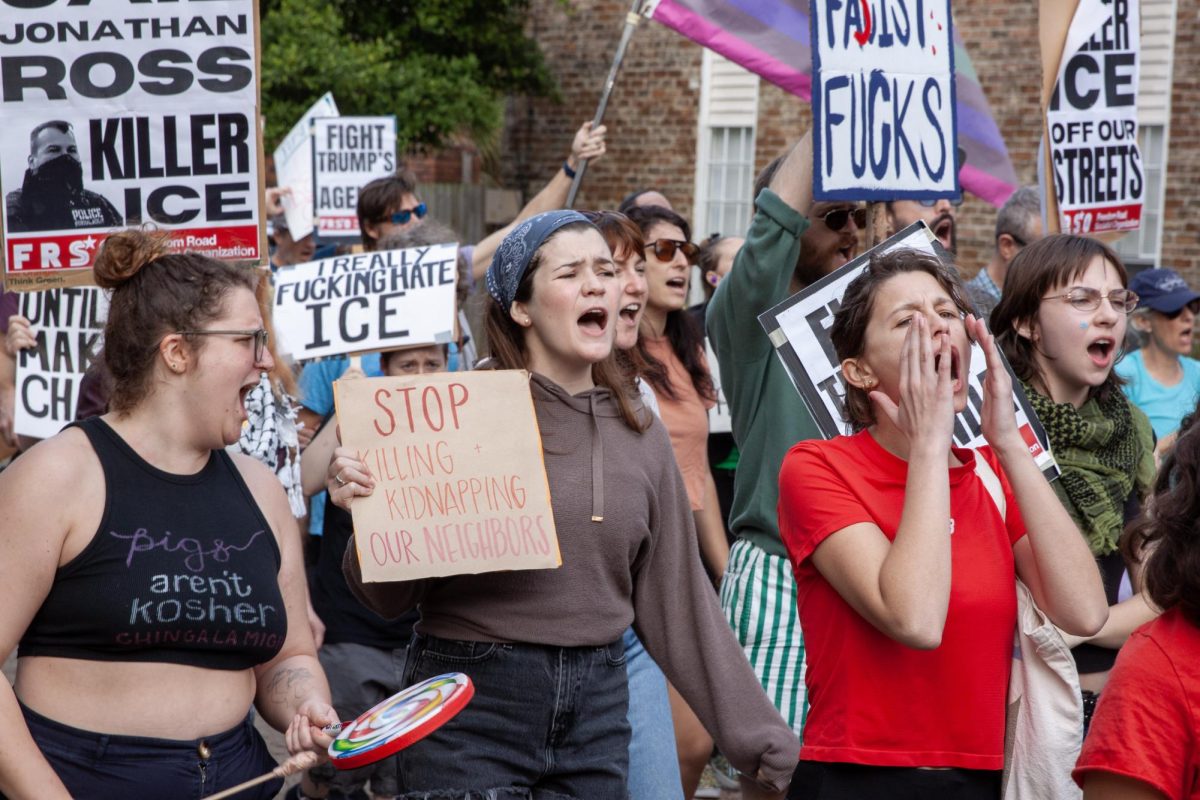
Imagine you attend a protest on Jan. 7 in the bustling, diverse city of Minneapolis, Minnesota, surrounded by others in support of migrants’ rights, only to watch a woman, Renee Good, be shot multiple times and killed in broad daylight by an Immigration and Customs Enforcement officer. Then, just weeks later, you watch a man, Alex Pretti, shot multiple times and killed in the same vicious manner on Jan. 24.
That’s what onlookers experienced after attending a protest to stand up for their neighbors; the same neighbors who are not offered due process simply for the act of migration. The same neighbors who are being ripped from their homes and experiencing forced assimilation in a country that has prided itself on the idea of the American Dream. Renee Good and Alex Pretti are two more people whose due process rights were violated by those who are supposed to protect them.
My city mourns the loss of these two brave individuals in a place where we have amplified diverse cultures and backgrounds to bring light to our city. Although we have been forced to grieve, the light of Minneapolis shines through in the nationwide fight for immigrant justice. Sadly, these deaths reflect a continuing trend.
According to Ilse Ramirez, 2025 saw 23 reported deaths involving ICE in a single fiscal year, marking the most fatal period for ICE detainees since 2004. In 2026, the numbers are already on pace to surpass that record, with eight people dead inside immigration detention centers or as a result of ICE shootings in January alone. This does not account for detainees released shortly before their deaths or those whose cases go unreported.
The villainization of migrants has become commonplace. A study by Michael Light and Ty Miller found that increased undocumented immigration is actually associated with declines in violent crime. Another study by Cherra Mathis and David Androff highlights how immigration court proceedings are civil, not criminal, in nature. Because of this, migrants have the right to a lawyer but are not automatically entitled to one. According to Article 13 of the 1948 Universal Declaration of Human Rights, the ability to move freely is a fundamental human right.
And yet, individuals who migrate are not afforded the same protections and are treated as if they are violent criminals. Practices that should spark outrage have become normalized, denying migrants their humanity by defining them solely through criminal labels such as “illegal aliens.” This has allowed Immigration and Customs Enforcement to distance itself from the people it interacts with. The very institution meant to protect us instead instills fear in our neighbors, pushing them further into the shadows, where their stories are lost and their intentions distorted by the media.
When public outcry is met with intimidation and fearmongering, it enables the abuse of power and the oppression of marginalized groups. People who attempt to stand up against this unjust system face serious repercussions, ranging from losing their livelihoods to losing their lives. Public safety should not create fear, it should provide protection. People seeking asylum due to destitution, violence, or war should not be met with persecution. Instead, they should be welcomed with open arms, as the so-called American Dream proclaims, an ideal that has been slipping away for decades.
The oxymoronic nature of the “American Dream” allows it to be equated with a false reality. We cannot claim to practice what we preach when entire groups are excluded from this vision. Human rights still exist, regardless of someone’s background—including their immigration status.
The world we live in today exists because generations before us made the decision to migrate for countless reasons. Accepting this truth bridges the divide between “us” and “them.” Because of this artificial separation, we must take action against individuals and institutions that contribute to the degradation of immigrants. There is no place in society for those who violate human rights, tear families apart, and spread fear among communities.
ICE must be abolished. This requires sustained lobbying efforts, the termination of its funding, and the expansion of sanctuary policies that build trust between communities and law enforcement. Similarly, other cities should follow the example of places like Chicago by implementing laws that allow ICE agents to be held accountable for wrongdoing. Minneapolis has already begun to set the stage for how cities can exercise their First Amendment rights and challenge abuses of power.
Individuals who care about this issue should attend protests and support local migrant communities and businesses. People must also use social media to amplify interactions between ICE and individuals, especially as anyone with an accent or a non-white identity has increasingly become a target. Another way to raise awareness is by contacting representatives and advocating for policies that protect migrants.
Every constituent should exercise their right to vote in local and state elections. Standing idly by is not only a disservice to our neighbors, friends, and family who have been directly affected, but also to the countless others enduring similar injustices.
How many more lives must be ruined before people can, quite literally, just live in peace?