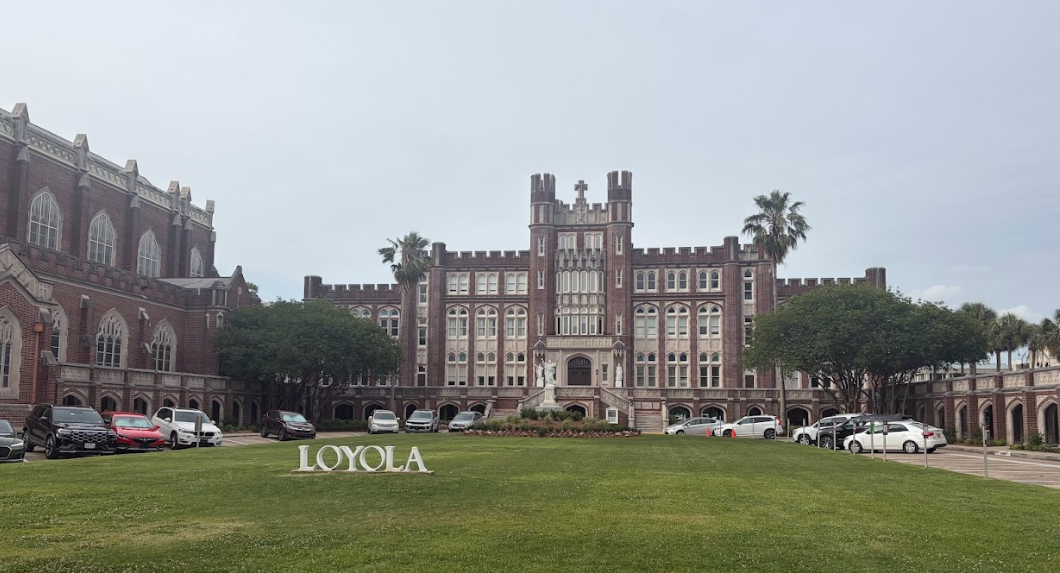
In 1952, twelve years before the signing of the Civil Rights Act of 1964, Norman Francis became one of only two Black students admitted to Loyola’s law school. Three years later, in 1955, he became the first African American to graduate from Loyola University. That detail matters. This was not post–Civil Rights Act America. This was the Jim Crow South, where segregation was still legally and socially enforced. For Francis, enrolling at Loyola was not just about earning a degree, it was an act of courage.
It is easy to reduce milestones like his to simple “firsts.” The first Black law student. The first Black graduate. But when we do that, we ignore the reality of what those moments required. We overlook the isolation, the resistance, and the pressure of walking into classrooms where you were not fully welcomed. Being the first often means being alone.
Loyola’s relationship with integration was complex and, at times, frustrating for students of color. In a piece published by The Maroon, staff writer Patrick Rafferty detailed how racial diversity was challenged throughout much of the university’s history.
On Feb. 6, 1970, nearly twenty years after Francis broke the color barrier, the Black Student Union was formed to help Black students adjust to a predominantly white campus. That fact alone shows that admission did not automatically create belonging.
In November 1983, The Maroon ran a two-page spread describing racism in Loyola’s classrooms. According to the article, 58% of students believed instructors showed prejudice on the basis of race. That statistic is difficult to ignore. Even after integration, many students still felt bias in academic spaces. Structural change did not immediately erase cultural issues.
By 1993, however, some progress was visible. Only 14% of Loyola’s student body described racial relations at the school as poor, and 75% of Black students said they would recommend Loyola to their peers. These numbers suggest improvement. They show that student organizing, faculty advocacy, and administrative shifts can lead to meaningful change. But that progress did not happen on its own. It was built on the efforts of people like Francis who were willing to endure discomfort in order to make the institution better.
As Justin Daffron wrote in The Maroon, Loyola’s residence halls were not integrated when Francis was a student. He did not find a home of belonging in campus housing because the institution had not yet made space for him. Yet instead of walking away, he worked with other students and faculty to push for fuller integration at every level. That decision, choosing reform over retreat , is what truly defines a trailblazer.
After graduating from Loyola, Francis went on to become one of the longest-serving college presidents in American history. At Xavier University of Louisiana, he served for nearly 50 years. Under his leadership, Xavier became a national leader in sending African American students to medical school and became a model for Black higher education in the Deep South. His impact extended far beyond Loyola and far beyond New Orleans.
In recognition of his contributions to education and democracy, Francis received the Presidential Medal of Freedom, the highest civilian honor in the United States. That award reflects not only his professional accomplishments but also the moral leadership he demonstrated throughout his life.
It is also important to acknowledge that it took Loyola decades to fully honor him. While Francis blazed trails in the 1950s, the renaming of a residence hall and other visible recognitions came much later. That delay is worth reflecting on. Institutions sometimes move slower than the individuals who transform them. Recognition often follows long after courage.
Still, honoring him now sends a clear message. The student who once could not live in integrated residence halls will now have his name displayed prominently on campus. That reversal is powerful. It symbolizes growth, accountability and remembrance.
Given the current social climate in the United States, this recognition feels especially necessary. Civil rights remain at the forefront of national debates. In multiple states, legislation has limited diversity initiatives in public higher education. Issues surrounding voting rights, policing and educational access continue to spark political and legal battles.
These realities show that progress is not permanent. The challenges Francis faced may look different today, but they have not disappeared entirely.
We often talk about trailblazers as figures from the past. But there are trailblazers among us now. Student-led organizations promoting racial equity, professors working to diversify curricula, and civil rights groups taking legal action to protect constitutional rights. The lesson of Francis’ life is not just to celebrate what he accomplished. It is to recognize that the work continues.
Honoring Dr. Norman C. Francis is more than placing his name on a building. It is acknowledging that many of the barriers he faced still have modern parallels. It is committing to ensure that no student at Loyola feels like an outsider in their own university.
Trailblazers clear the path. Now, it is up to us to keep walking it.